China's Jiangmen Underground Neutrino Observatory (JUNO) has achieved its first major scientific breakthrough, with results published as the cover article in Nature on June 10, 2026. Analyzing just 59 days of data collected between August and November 2025, the detector reduced measurement uncertainties of two key neutrino oscillation parameters by a factor of 1.6 — surpassing the combined precision of all global experiments conducted over the past several decades.
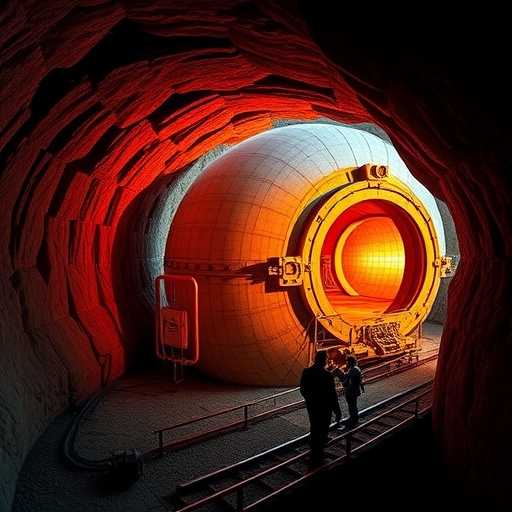
Built 700 meters underground in Jiangmen, China, JUNO is filled with 20,000 tons of liquid scintillator inside a 35.4-meter acrylic sphere studded with 45,600 photomultiplier tubes. It detects neutrinos streaming from nuclear power reactors 53 kilometers away. The experiment has run stably for over nine months, with high-quality data confirming the detector is performing to design specifications.
The primary scientific goal is to resolve one of particle physics' deepest open questions: whether neutrinos follow a "normal" or "inverted" mass ordering. The collaboration describes JUNO as "a key player in the emerging precision era of neutrino oscillation physics," and physicists worldwide are watching closely for its next results.