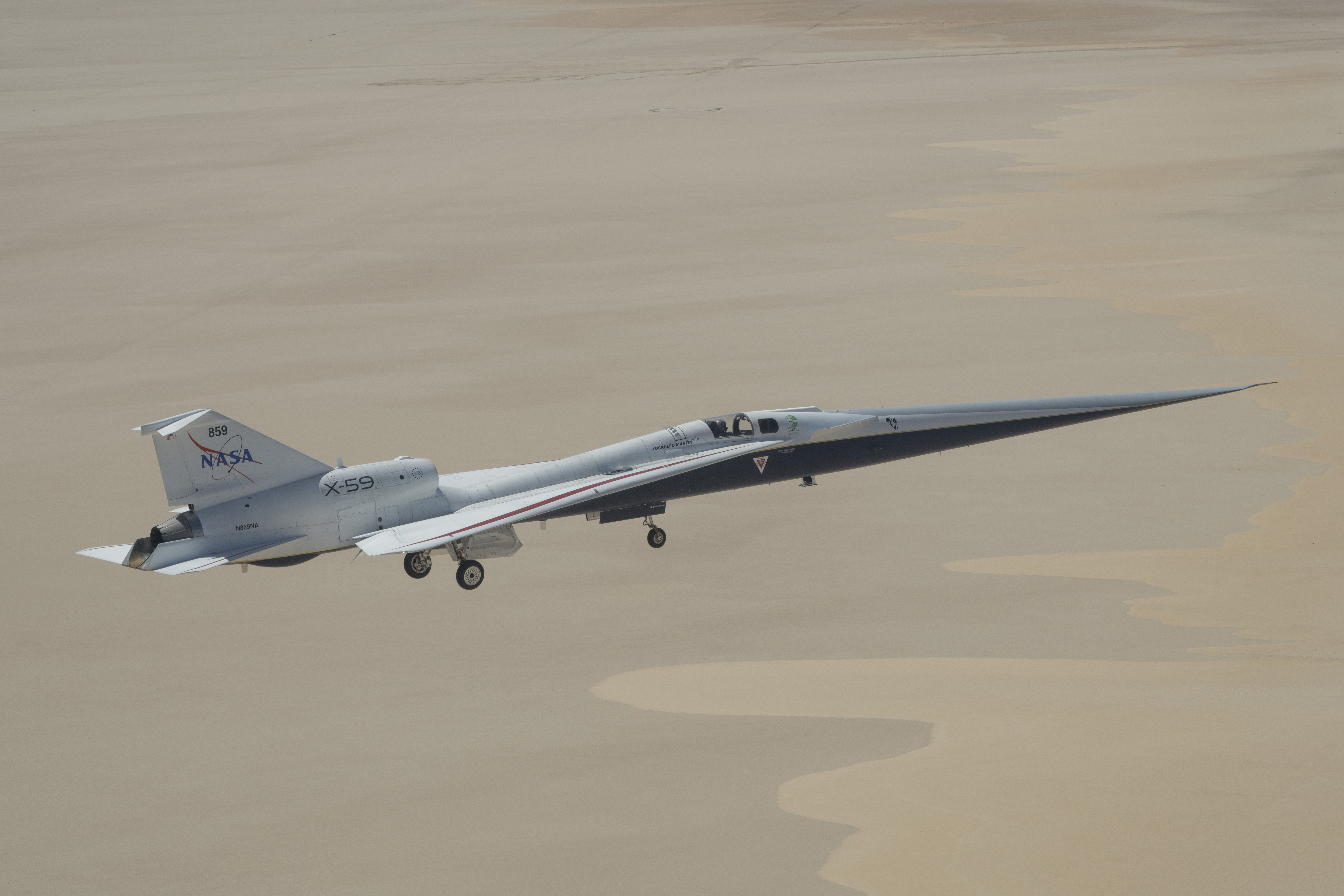
NASA's experimental X-59 jet is expected to fly faster than sound for the first time in early June, exceeding 630 mph at roughly 43,000 feet during a planned series of test flights at the Armstrong Flight Research Center in California. A follow-up "mission conditions" flight will push the aircraft to Mach 1.4 (about 925 mph) at 55,000 feet.
The sleek jet is engineered to replace the thunderous sonic boom with a soft "thump" no louder than a car door closing — around 75 EPNdB, versus the 105-110 EPNdB roar of the retired Concorde. Its elongated nose and shaped airframe scatter shock waves before they reach the ground, and it has no forward windscreen at all: pilots fly using an external camera feed shown on an augmented-reality display.
"What comes next is the first time this one-of-a-kind aircraft will fly supersonic," said project manager Cathy Bahm. NASA plans to fly the X-59 over several U.S. cities and gather public reaction, hoping the data will persuade regulators to lift decades-old bans on supersonic flight over land and open the door to a new generation of fast commercial jets.