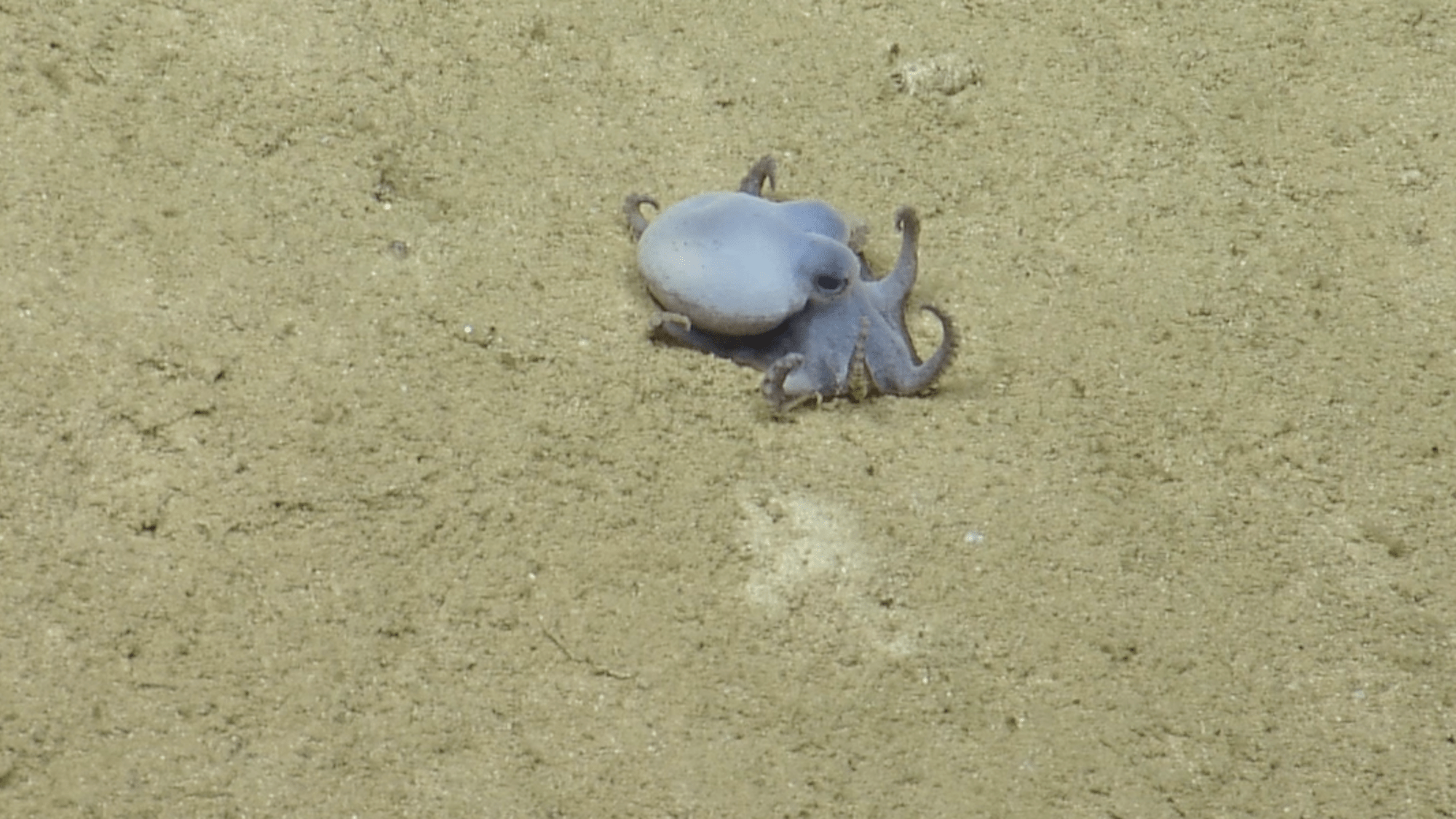
Scientists have officially described a tiny, vividly blue octopus discovered nearly 6,000 feet beneath the Galapagos Islands as an entirely new species, named Microeledone galapagensis. The announcement was published in the journal Zootaxa on May 25, 2026, capping years of study of a single female specimen.
The golf-ball-sized creature was first spotted in 2015 by a remotely operated vehicle from the exploration vessel Nautilus, combing the seafloor near Darwin Island at the northern edge of the archipelago. Lead author Janet Voight, curator emerita of invertebrates at Chicago's Field Museum, said she knew immediately it was something special when colleagues sent her photos.
The octopus stood out for its smooth skin, large rachidian tooth, and oversized funnel organ, while its lack of an ink sac, crop diverticulum, and anal flaps complicated its placement within the Megaleledonidae family. The find underscores how much of the deep ocean remains unexplored.