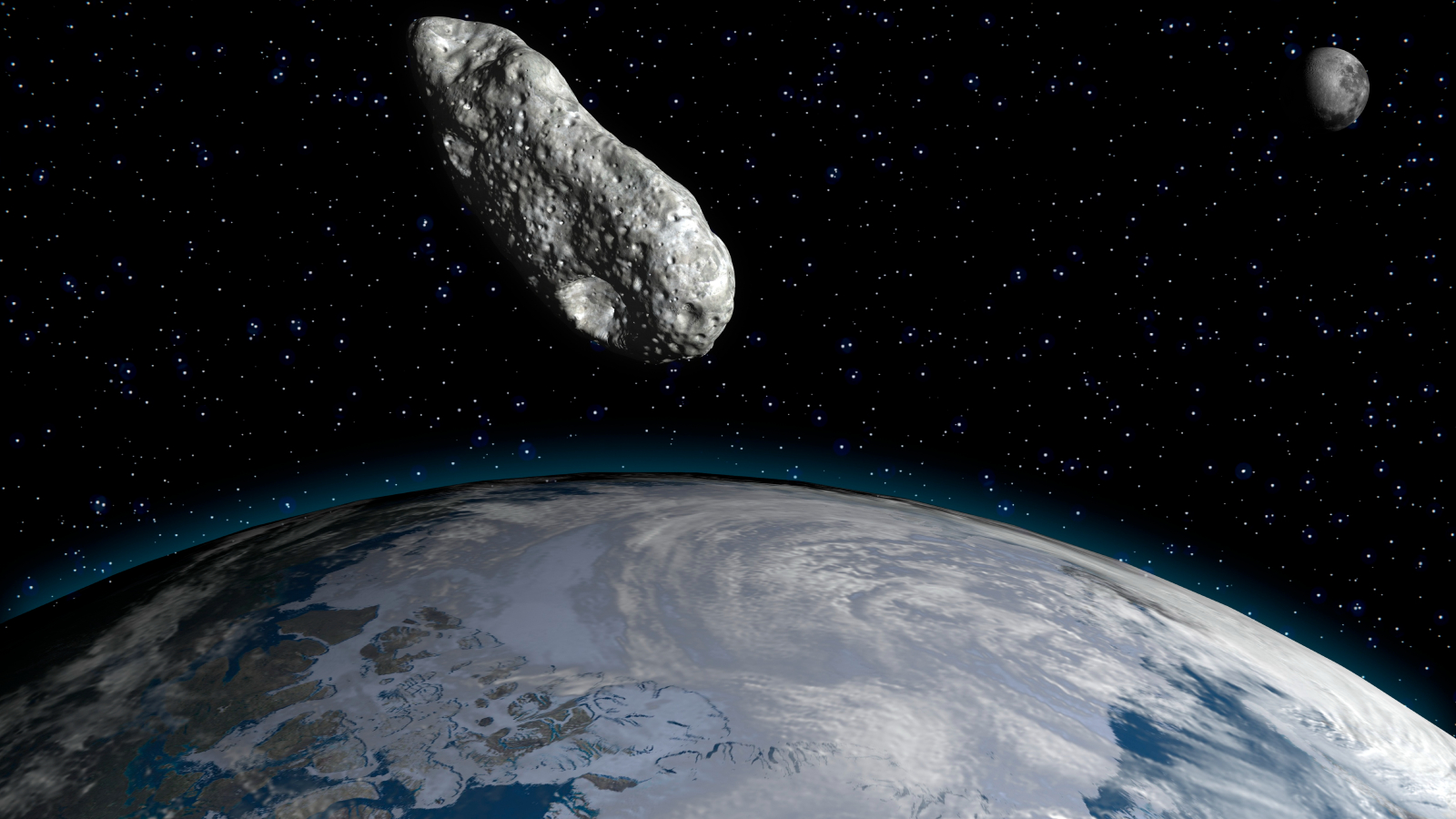
Asteroid 2026 JH2, a near-Earth object discovered just eight days ago by the Mount Lemmon Survey in Tucson, Arizona, will make its closest approach to Earth at 5:23 p.m. EDT on May 18, 2026. The space rock will pass within 56,628 miles (91,135 km) of Earth, less than a quarter of the Earth-Moon distance, while traveling at 19,417 mph (31,248 km/h) relative to our planet.
The asteroid measures between 15 and 35 meters (49 to 110 feet) across, placing it in the same size class as the Chelyabinsk meteor that exploded over Russia in 2013. Follow-up observations from Steward Observatory, Farpoint Observatory, and Magdalena Ridge Observatory have confirmed its trajectory in the two days since discovery. Astronomers stress there is zero risk of impact.
During the flyby, 2026 JH2 will brighten to apparent magnitude 11.5, faint but visible through a small telescope under dark skies. The Virtual Telescope Project will livestream the encounter for viewers without their own equipment.