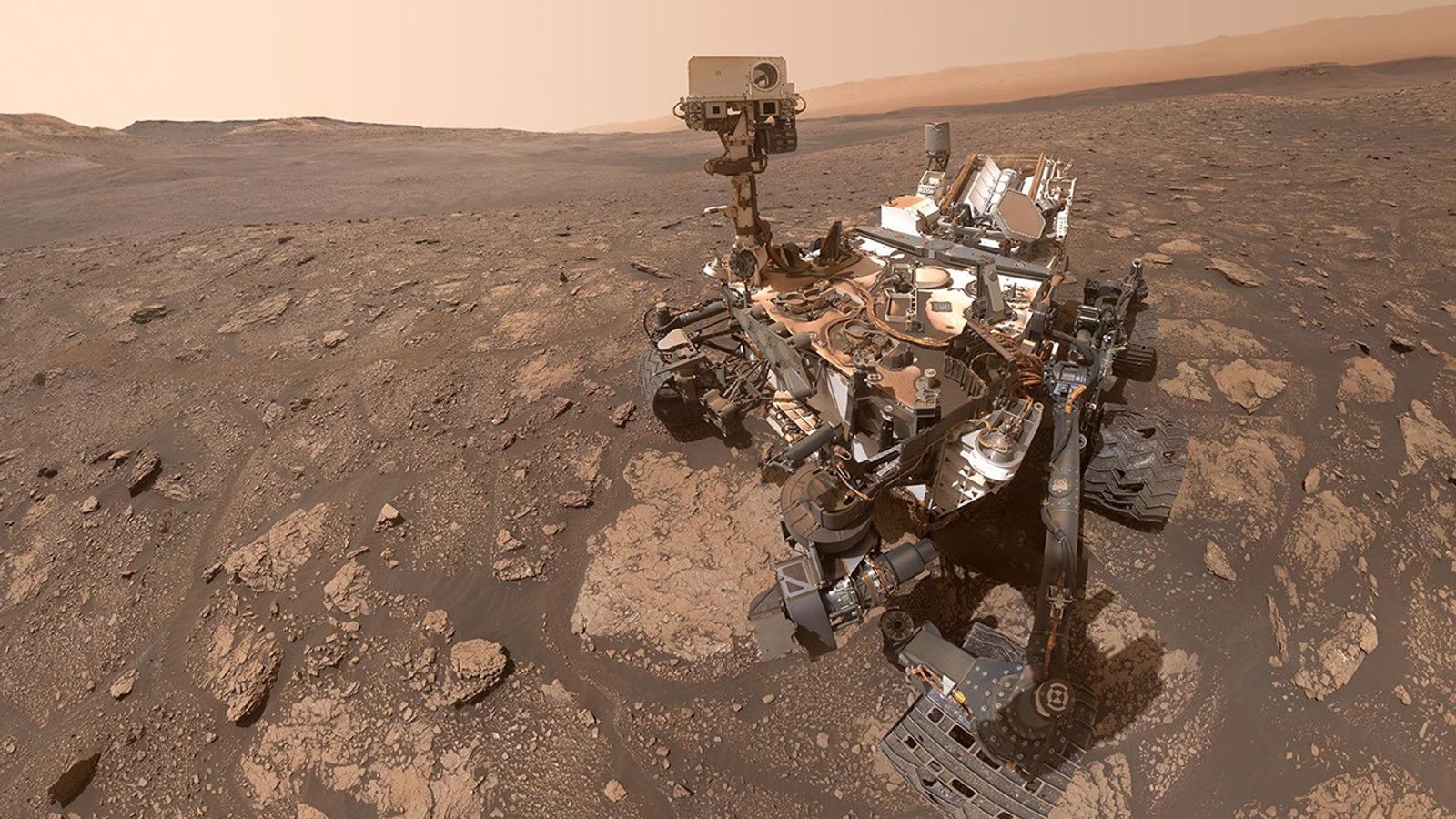
NASA's Curiosity rover has identified the most diverse collection of carbon-containing organic molecules ever detected on Mars, including seven compounds never before seen on the Red Planet. The findings, published in Nature Communications and led by Amy Williams of the University of Florida, come from a rock dubbed "Mary Anning 3" that Curiosity drilled in October 2020 in the Glen Torridon region of Mount Sharp.
Among the 21 carbon-bearing compounds identified, scientists detected a nitrogen heterocycle — a ring of carbon atoms that includes nitrogen — which is a chemical predecessor to the building blocks of RNA and DNA. Researchers also found benzothiophene, a carbon- and sulfur-bearing molecule commonly observed in meteorites. The molecules appear to have been preserved for roughly 3.5 billion years in clay minerals from an ancient lakebed.
Scientists cannot yet determine whether the organic compounds were produced by biological or geological processes, but the discovery confirms that ancient Mars had the chemistry needed to support life. The result strengthens the case that future sample-return missions could uncover decisive evidence of past habitability.