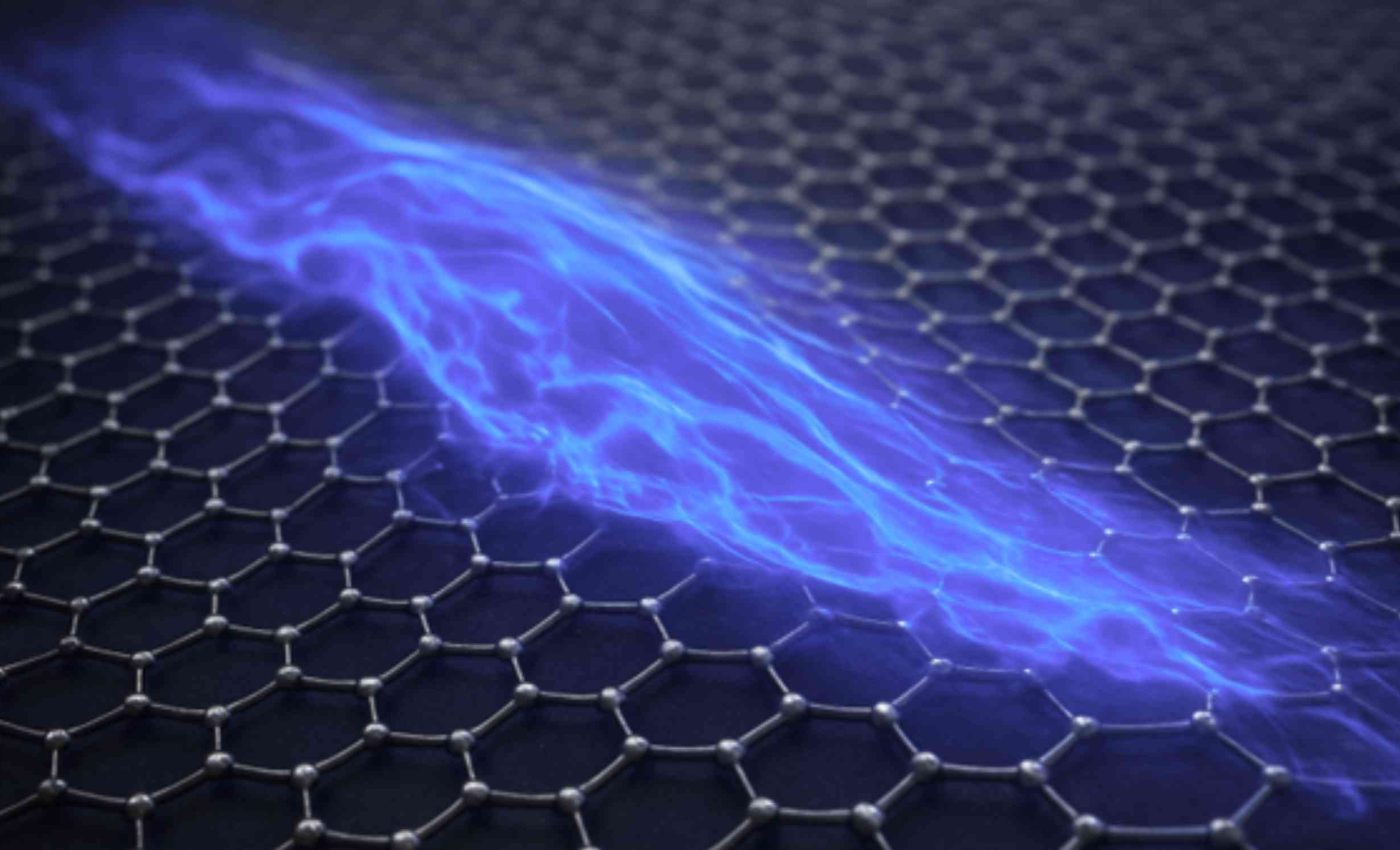
Physicists at the Indian Institute of Science (IISc) in Bangalore have observed electrons in graphene behaving as a nearly frictionless quantum liquid, violating one of the oldest rules in metal physics — the Wiedemann-Franz law — by more than 200 times. The law, established in 1853, states that a material's ability to conduct heat and electricity are always proportional. In graphene, that relationship breaks down completely.
The exotic behavior emerges at the so-called Dirac point, a precise electronic threshold where graphene is neither a metal nor an insulator. At this point, electrons stop acting as individual particles and instead flow collectively like a liquid roughly 100 times less viscous than water. Researchers call this state a "Dirac fluid" — an exotic form of matter that mimics the quark-gluon plasma present microseconds after the Big Bang.
"It is amazing that there is so much to do on just a single layer of graphene even after 20 years," said IISc professor Arindam Ghosh, corresponding author of the study published in Nature Physics. The team, which includes collaborators from Japan's National Institute for Materials Science, says the results open a new window into quantum phenomena and establish graphene as a unique tabletop laboratory for probing the boundary between quantum mechanics and everyday physics.