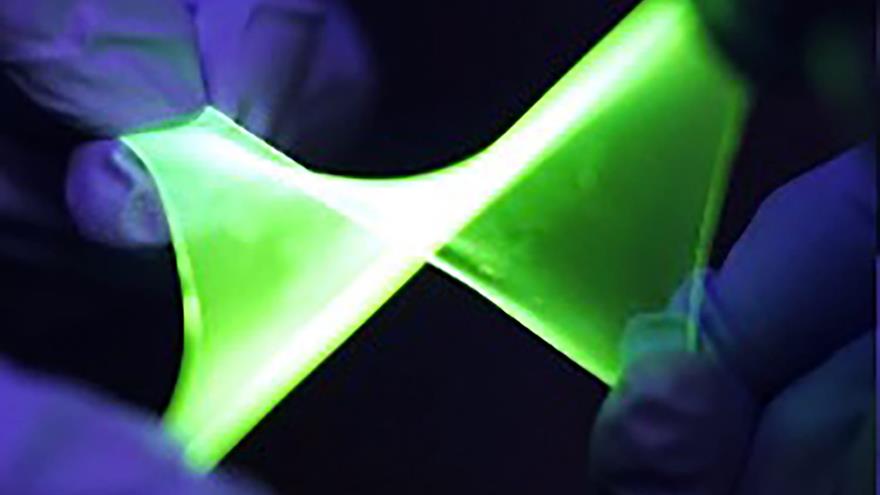
Scientists from Drexel University and Seoul National University have solved a decade-old problem in flexible electronics: creating OLED displays that stretch without dimming. Their new design, published in Nature, can extend to over twice its original size while maintaining consistent brightness and a record 17% external quantum efficiency.
The breakthrough combines two innovations. The light-emitting layer uses "exciplex" molecular pairs that recycle triplet energy into light even when embedded in stretchy elastomer materials. For the electrodes, researchers incorporated MXenes—atomically thin metal carbide sheets invented at Drexel in 2011—combined with silver nanowires to maintain electrical conductivity during deformation.
After 100 stretch cycles at 2% strain, displays retained 83% of their light output. The technology could enable wearable devices that sit directly on skin, displaying real-time health data like temperature, blood pressure, or blood flow changes.