Overview
The Otterhound is a big, rough-coated scenthound from England, built for long days of trailing quarry along riverbanks and through water. Its waterproof coat, large webbed feet and superb nose set it apart from most other hounds.
With otter hunting long ended, the breed survives in very small numbers and is listed as a Vulnerable Native Breed by the UK Kennel Club. Those who keep one find a sociable, comical and sometimes stubborn family dog.
History
Dogs resembling today's Otterhound were kept by hunts in the north-west of England in the early 1800s. Breeders later added French rough-coated hounds such as the Griffon Vendéen and Griffon Nivernais, and a Bloodhound cross also influenced several kennels.
Otter hunting protection came in 1978, ending the breed's original purpose. Some packs turned to hunting mink, but many disbanded. Only a limited number of bloodlines suited life as pets, and numbers have stayed very low, with around 600 dogs worldwide in 2012.
Appearance
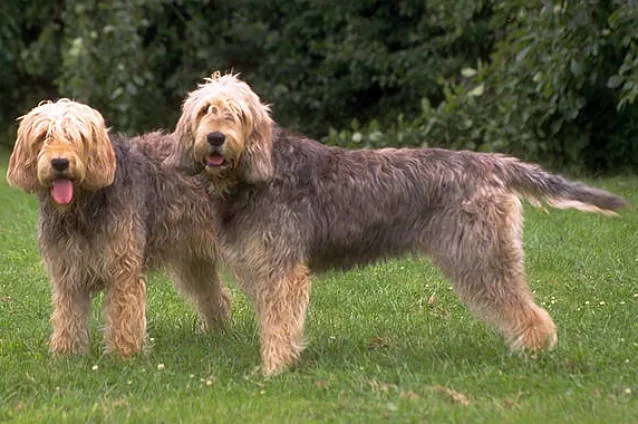
A large, sturdy hound with a deep head, a broad nose, deep-set eyes and long ears that fold inwards into a drape. The rough beard and moustache give a distinctive, slightly untidy look.
The body is strong with straight forelegs, muscular hindquarters and big, round, thickly padded feet. The tail is thick at the base and never curls over the back. Males stand about 69 cm and females about 61 cm at the shoulder.
Temperament
Otterhounds are friendly, boisterous and good-humoured, usually getting along well with family members and visitors. They are pack-minded and enjoy company, though they can be independent and slow to respond to commands.
Their nose rules their behaviour. A strong scent can pull them off across fields, so secure fencing and a lead in open country are wise. They also have a loud, deep voice.
Care and exercise
These hounds need substantial daily exercise, ideally including long walks and the chance to follow scents or swim. A large, securely fenced garden helps, and they are not well suited to small flats.
The rough, dense coat needs brushing a couple of times a week to avoid tangles, and the beard tends to get wet and messy at the water bowl. Keep the ears clean and dry. Training calls for patience and rewards.
Health
A UK breed club survey found an average life expectancy of about 10 years. Gastric dilatation volvulus (bloat) is a notable risk, affecting around 9% of surveyed dogs. Feeding smaller meals and avoiding hard exercise around meals is sensible.