Overview
The Bloodhound is a large scent hound known for its extraordinary tracking ability. Originally bred for hunting deer and boar, it later became the classic man-trailer used by police.
It is a kind, affectionate dog at home, but its nose often rules its behaviour.
History
The Bloodhound descends from hounds associated with the Abbey of Saint-Hubert in Belgium, though the earliest origins probably lie in France. In medieval England it served as a leash hound that found a single animal's cold scent before the pack was released.
From early times it also trailed people. The original St Hubert strain faded in the 19th century, and the breed's development kept its line alive.
Appearance
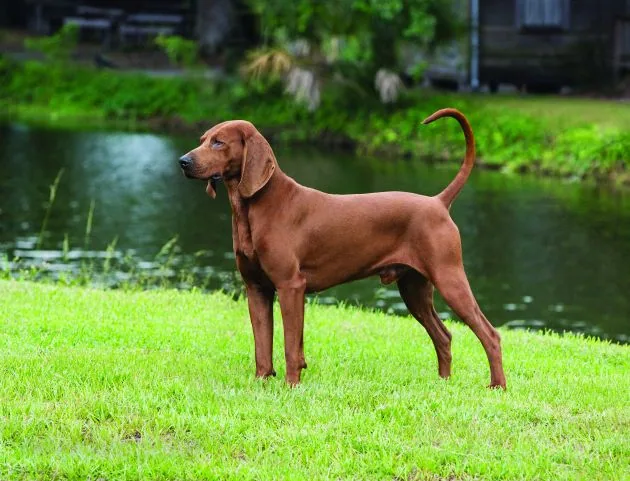
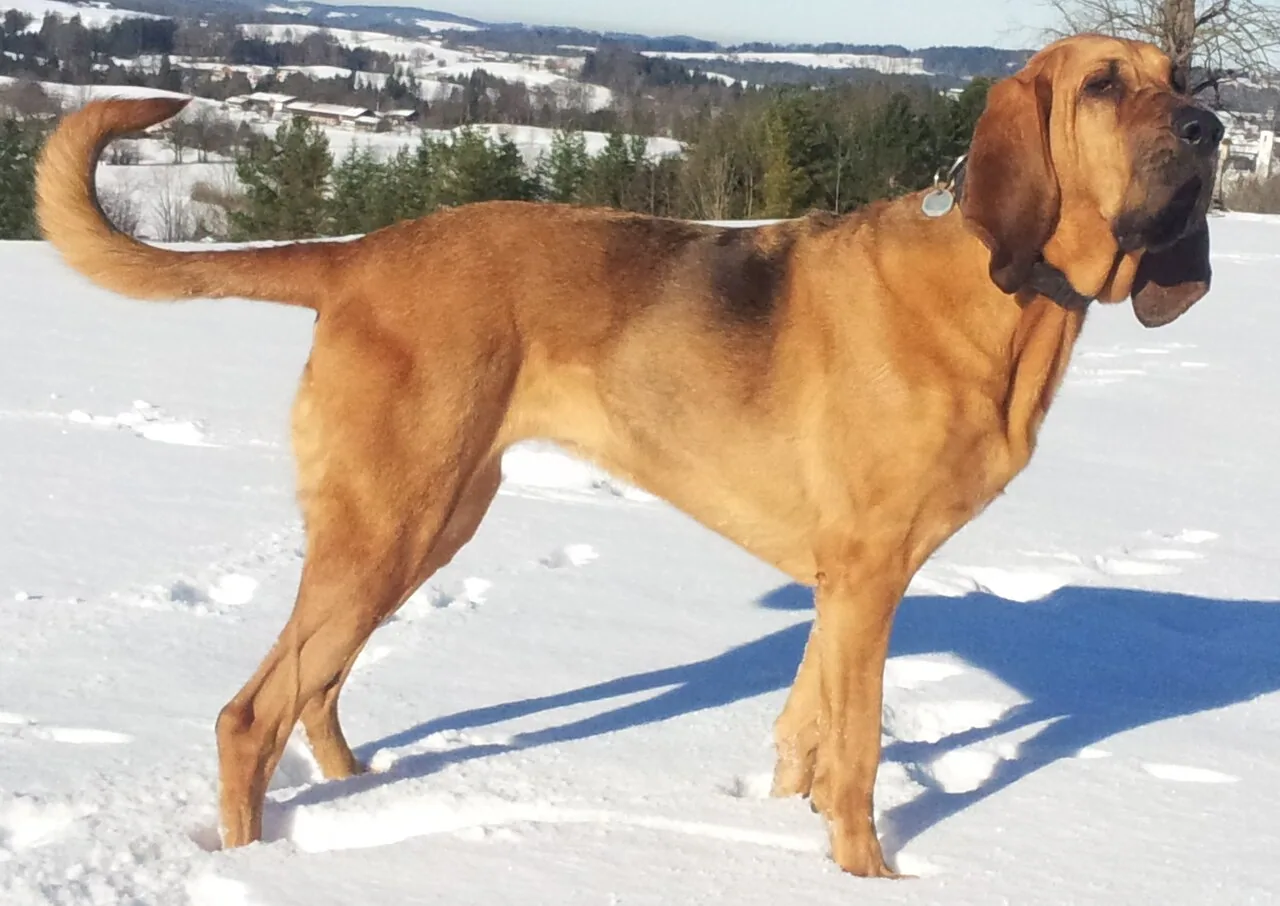
The Bloodhound has a heavy bone structure, a long head with loose, wrinkled skin, long drooping ears and deep-set eyes. Males stand about 58 to 70 cm tall and weigh 36 to 72 kg.
The coat is hard and short. Accepted colours are black and tan, liver and tan, and red, sometimes with white on the chest and feet.
Temperament
Bloodhounds are gentle, affectionate and even-tempered, and are good family dogs. They are tireless once on a scent.
That tracking instinct makes them willful, with a tendency to pull on the lead and be hard to obedience train. They like company and do poorly when left alone.
Care and exercise
Bloodhounds need daily walks in a secure area, since they will follow a scent for miles. A tall fence and a lead are essential, and scent games suit them well.
Regular care of the ears, eyes and facial wrinkles is needed. They drool and overheat easily, so avoid exercise in hot weather and feed small meals to reduce bloat risk.
Health
Gastric dilatation volvulus (bloat) is the most common serious problem and leading cause of death. Eye, skin and ear problems are common, and cancer is another frequent cause of death. The breed has a short lifespan and overheats easily.