Overview
The Himalayan Sheepdog, known locally as the Bhote Kukur, is a mountain guardian found in the foothills from eastern Nepal to Kashmir. Shepherds and monasteries have relied on it for generations to protect flocks and property.
Unusually for a guardian, it also helps with herding and sometimes with hunting. It is a serious working dog and not a casual pet.
History
The dogs trace back to ancient times as companions and guardians of mountain shepherds and Nepalese monasteries. They are closely related to the somewhat larger Tibetan Mastiff.
There are regional types, such as the brindle, golden or black Kumaon mastiff and a smaller black type from Chamba, and a larger Bhutia sheepdog in Bhutan. As nomadic herding has declined, the traditional population has shrunk, though enthusiasts work to preserve it. Stray and feral dogs of this type also cause conservation concerns in some national parks.
Appearance
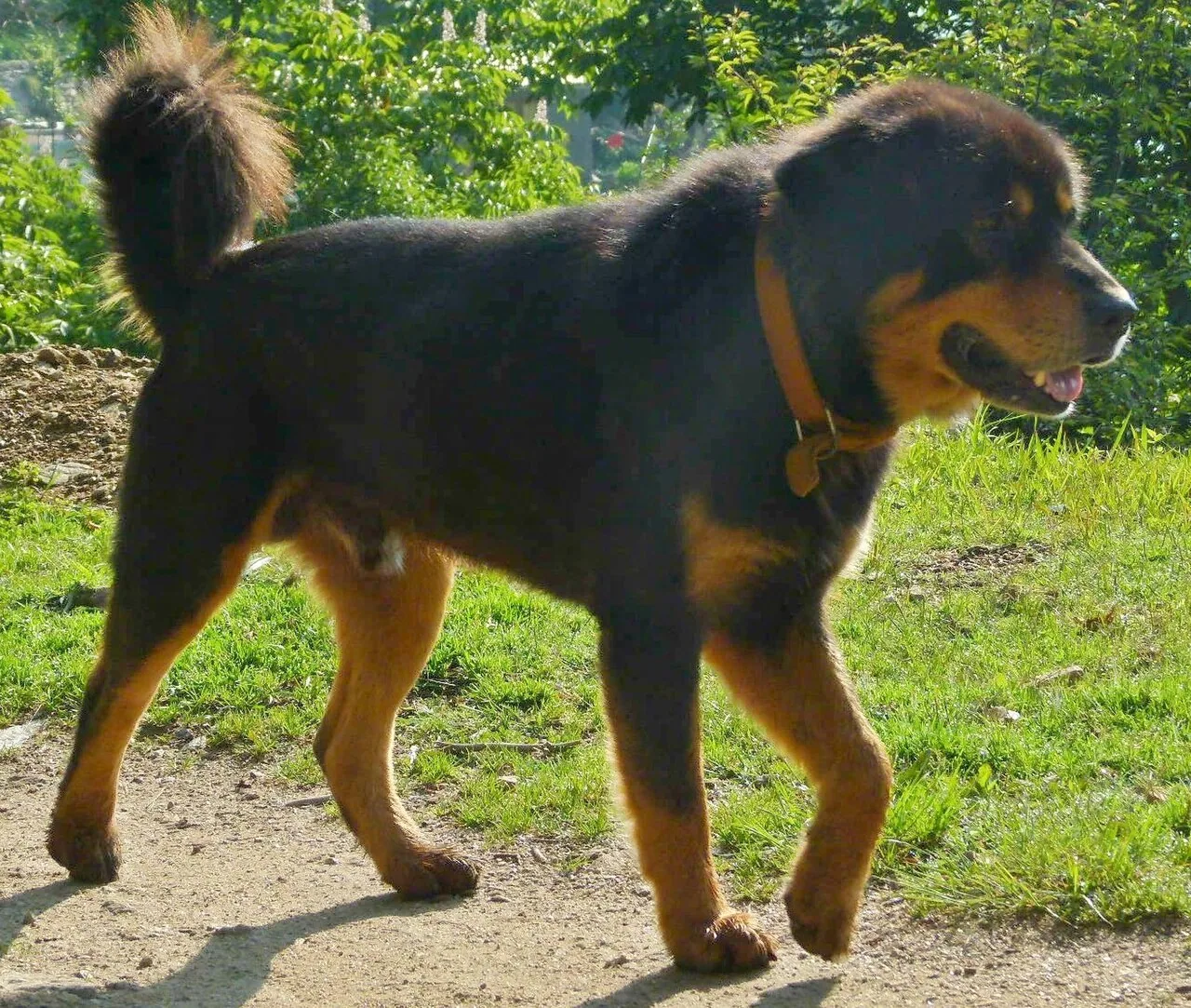
This is a powerful, sturdy dog suited to altitude, with a harsh, thick double coat, small drooping ears and a heavily plumed tail curled over the back.
Most are black and tan or solid black, often with white on the toes, chest and neck. Some local types are brindle or golden brown. The bark is deep and carrying.
Temperament
Himalayan Sheepdogs are alert, protective and independent, with a stronger guarding streak toward people than many mountain dogs. They bond with their own family and flock and are suspicious of outsiders.
They think for themselves and need an experienced, confident owner, early socialisation and secure boundaries.
Care and exercise
These dogs need space, a secure fence and meaningful work or patrol areas, and they do not suit small flats or busy urban life. Regular exercise and mental stimulation help prevent boredom and roaming.
The thick coat needs brushing a few times a week, and more during seasonal shedding. They tolerate cold well but can struggle in heat.