Overview
The Giant Schnauzer is a big, square, wiry-coated working dog from southern Germany. It was developed to drive livestock to market and guard farms, and later worked at breweries, butchers and stockyards.
It is intelligent, strong and devoted, but needs firm leadership, plenty of exercise and real tasks. It is best suited to experienced, active owners.
History
Schnauzers share their roots with the German Pinscher, in Bavaria and southern Germany, where rough-coated stable and carriage dogs were valued as ratters. The rough-haired type was officially named Schnauzer in 1917.
The Giant was a farm all-rounder and later a watchdog for city businesses. It stayed little known outside Bavaria until used as a military dog in both World Wars. It reached America in the 1930s and grew popular there in the 1960s. In Europe it is still prized for working ability.
Appearance
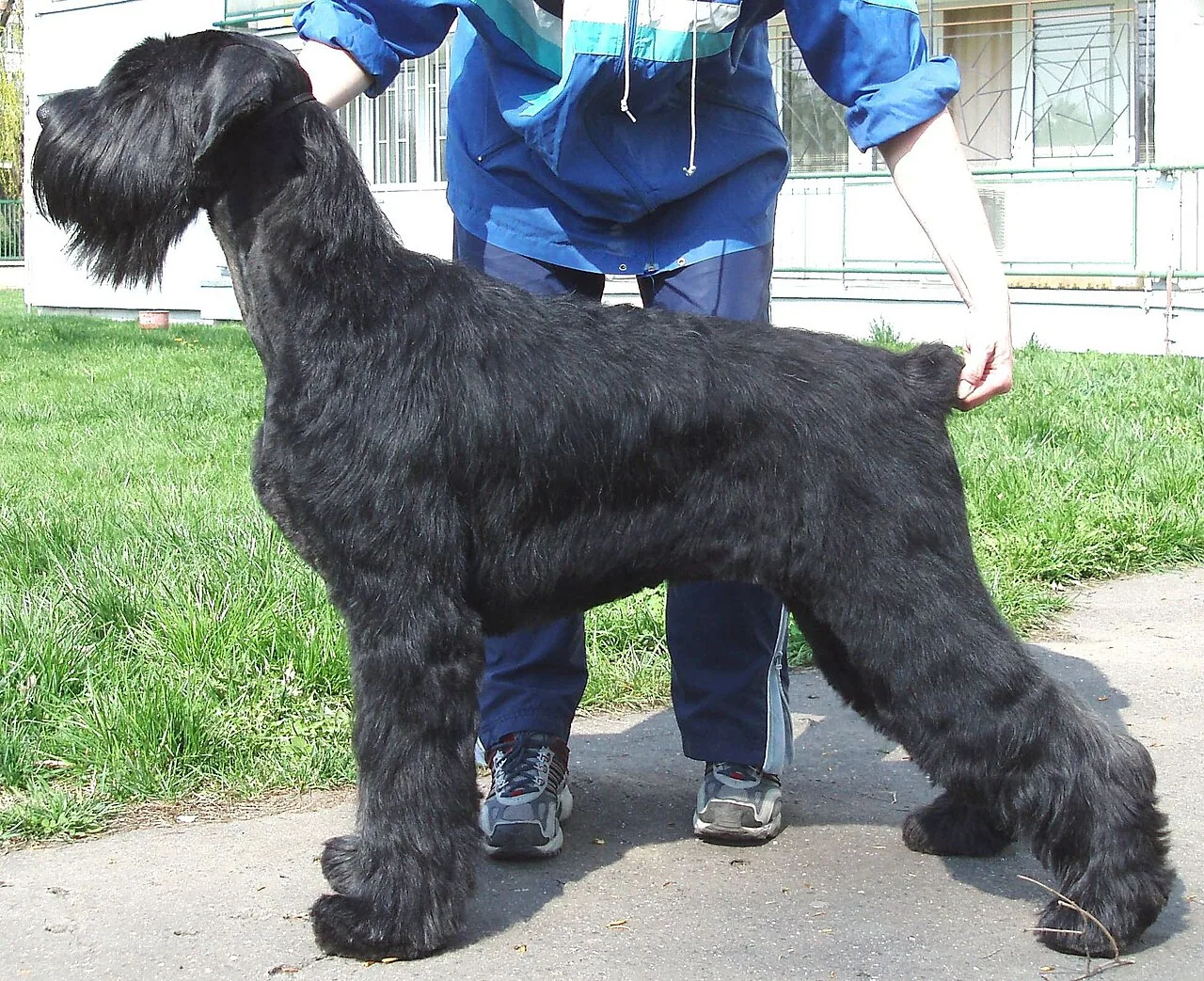
The Giant Schnauzer is a large, square, sturdy dog resembling an enlarged Standard Schnauzer. Males stand about 65 to 70 cm and females 60 to 65 cm. It has a long, rectangular head with a distinct beard and bushy eyebrows.
The dense, wiry, weather-resistant coat comes in solid black or pepper and salt. Ears and tail are cropped and docked in some places, but are natural in many countries.
Temperament
Giant Schnauzers are intelligent, spirited and strongly attached to their family. They are natural guardians, alert and wary with strangers, and can be dominant if not guided well.
They learn quickly and enjoy having a job, but can be strong-willed and sometimes boisterous. Early socialisation and consistent training are essential. Many are good with children of their own household but are too big and rowdy for small ones.
Care and exercise
This breed needs a lot of daily exercise and mental work, such as obedience, tracking, scent work or other dog sports. A bored Giant can become destructive or pushy.
The wiry coat needs regular brushing and hand-stripping or clipping a few times a year, with the beard cleaned after meals. It sheds little, but grooming effort is notable.
Health
Hip and elbow dysplasia are common. Eye problems, skin conditions, hypothyroidism and some cancers have also been reported. A UK survey suggested a lifespan of about 12 years.