Overview
The Catalan Sheepdog, or Gos d'Atura, is a medium-sized herding dog from the Pyrenean valleys and foothills of Catalonia. It was traditionally used to herd sheep and horses and today is also a companion.
It is a bright, adaptable all-rounder that enjoys work and sport, and it forms close bonds with its family while remaining watchful of strangers.
History
The breed descends from the once widespread and varied population of long-haired herding dogs of the Pyrenees, which also gave rise to the Pyrenean Shepherd and the Basque Shepherd Dog.
It was recognised in 1911 when the Spanish kennel society was formed, the first standard was written in 1929, and the FCI definitively accepted it in 1954. A revised standard followed in 1982 and the breed club was founded in 1984.
Appearance
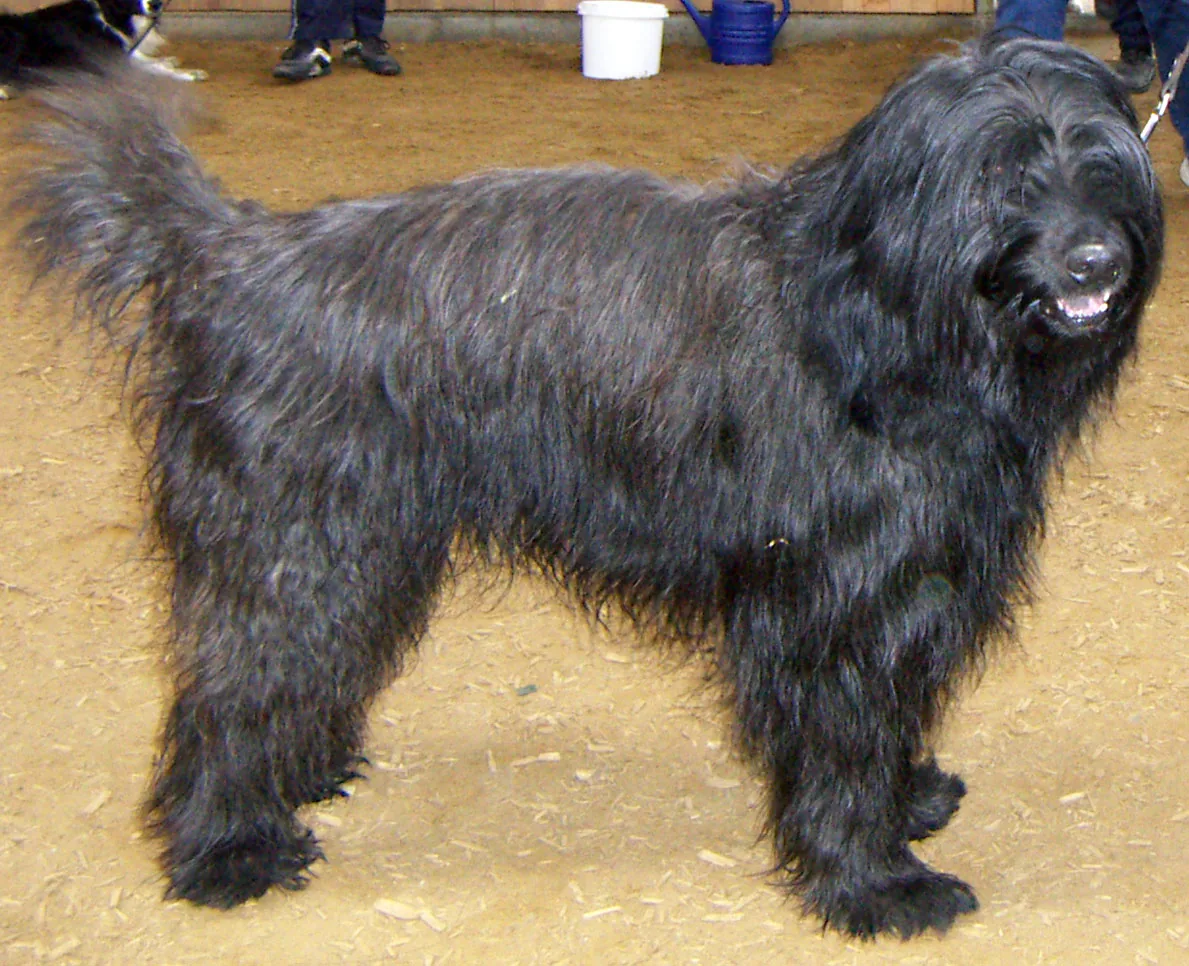
Dogs stand about 47 to 55 cm and bitches 45 to 53 cm, weighing roughly 20 to 25 kg and 17 to 21 kg. The long, flat or slightly wavy coat has a dense undercoat over the hindquarters and forms a beard, moustache and eyebrows without covering the eyes.
From a distance the coat looks one colour, but up close it is a mix of fawn, reddish brown, grey and black hairs. A short-haired variety exists but is nearly extinct.
Temperament
Cheerful, courageous and clever, the Gos d'Atura is eager to please and generally easy to train. It guards sheep without needing instruction and makes a keen watchdog for its family, to whom it becomes strongly attached.
Early socialisation is important, especially around children. With enough activity it is a quiet, balanced home companion.
Care and exercise
Plenty of outdoor exercise and mental activity keep this dog calm and happy. It excels at agility, obedience and herding-type games and suits owners who can be fair but firm.
Brush the long coat regularly to prevent tangles. Moulting happens in two stages, front half first and then the hindquarters, so expect a patchy look for a while.
Health
The breed is prone to hip dysplasia. The average life span is around 12 to 14 years.