Overview
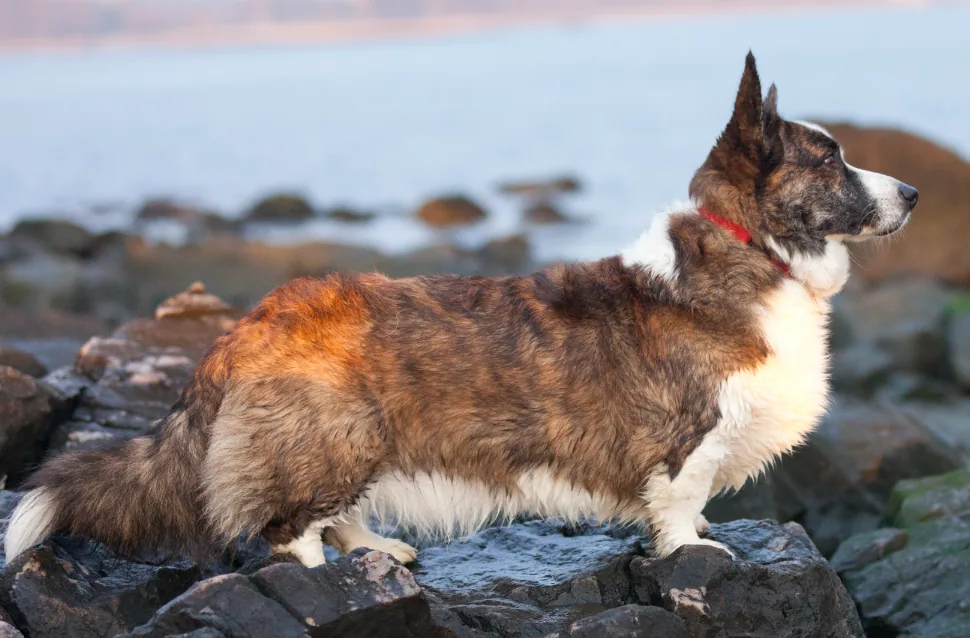
The Cardigan Welsh Corgi is one of the oldest breeds of the British Isles and one of two Welsh Corgi varieties. It is a long, low dog with upright ears and a long fox brush tail, built to herd cattle, sheep and poultry.
Today it is mostly a family companion that also shines in agility, obedience, tracking and herding trials. It is intelligent, athletic and adaptable to many kinds of homes.
History
Cardigan and Pembroke Corgis were listed as one breed by The Kennel Club in 1925, separated by 1928, and shown apart from 1934. The name comes from Cardiganshire (Ceredigion), where the breed developed.
Its origins are debated: one theory points to northern spitz-type dogs, another to the teckel family that also produced the Dachshund. The word corgi means dwarf dog in Welsh, and it was once called the yard-long dog.
Appearance
The Cardigan is long in body and short in leg, with upright ears and a long tail, unlike the Pembroke, which is smaller. Adults stand roughly 25 to 33 cm and weigh about 11 to 17 kg, males being heavier.
The double coat comes in red, sable, brindle, black or blue merle, often with white on the neck, chest, legs and muzzle.
Temperament
Cardigans are relaxed, affectionate and devoted to their families, though they can be reserved with strangers until they feel at ease. They are bright, athletic and eager to work.
Their herding instinct may show as nipping at running children, so it should be guided early. They also make capable little watchdogs.
Care and exercise
They need daily walks and mental work such as training games or herding-style activities. Their double coat benefits from weekly brushing, with more during seasonal shedding. Keep weight in check to protect the long back, and avoid encouraging high jumps.
Health
Life expectancy is around 13 years. Intervertebral disc disease is a concern because of the long back and short legs. Progressive retinal atrophy occurs in the breed. Cancer and old age were the most common causes of death in a UK survey.