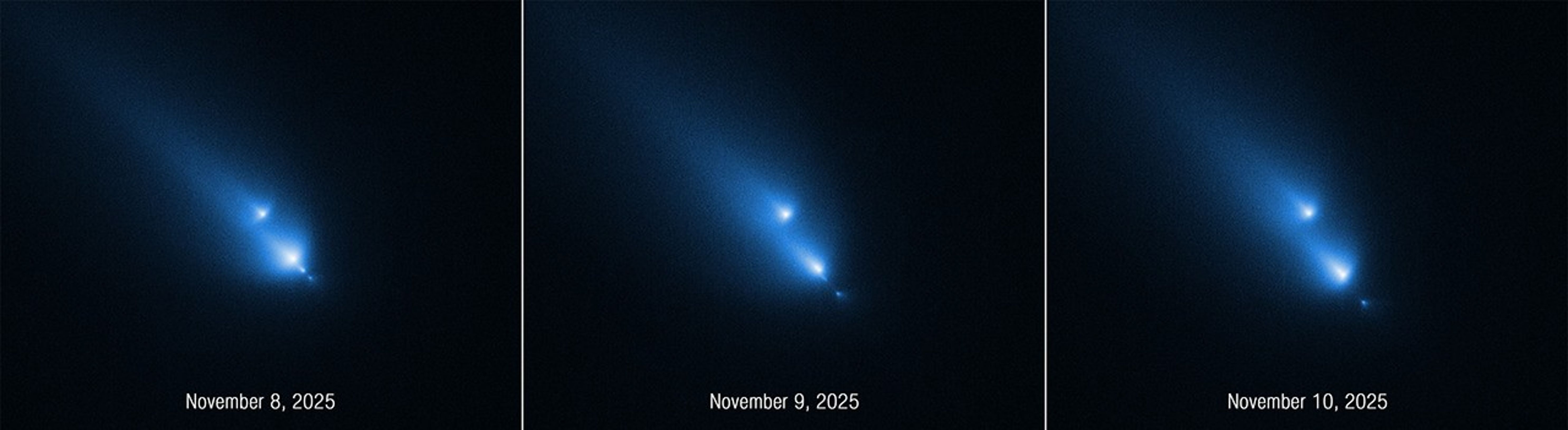
NASA's Hubble Space Telescope captured comet C/2025 K1 (ATLAS) fragmenting into at least four pieces in real time — something astronomers have long tried and failed to observe. The roughly 5-mile-wide comet was not even Hubble's original target; researchers at Auburn University switched to it due to technical constraints and unknowingly caught it mid-disintegration over three consecutive days in November 2025.
The images, taken just one month after K1's closest approach to the Sun — inside Mercury's orbit at one-third Earth's distance — show each fragment surrounded by its own coma of gas and dust. The team estimates the breakup began only eight days before Hubble viewed it. "Sometimes the best science happens by accident," said co-investigator John Noonan.
The findings, published March 18 in the journal Icarus, represent the earliest observation of a comet caught in the act of splitting apart. Principal investigator Dennis Bodewits noted that previous Hubble observations of fragmenting comets came weeks or months after the event — never just days.