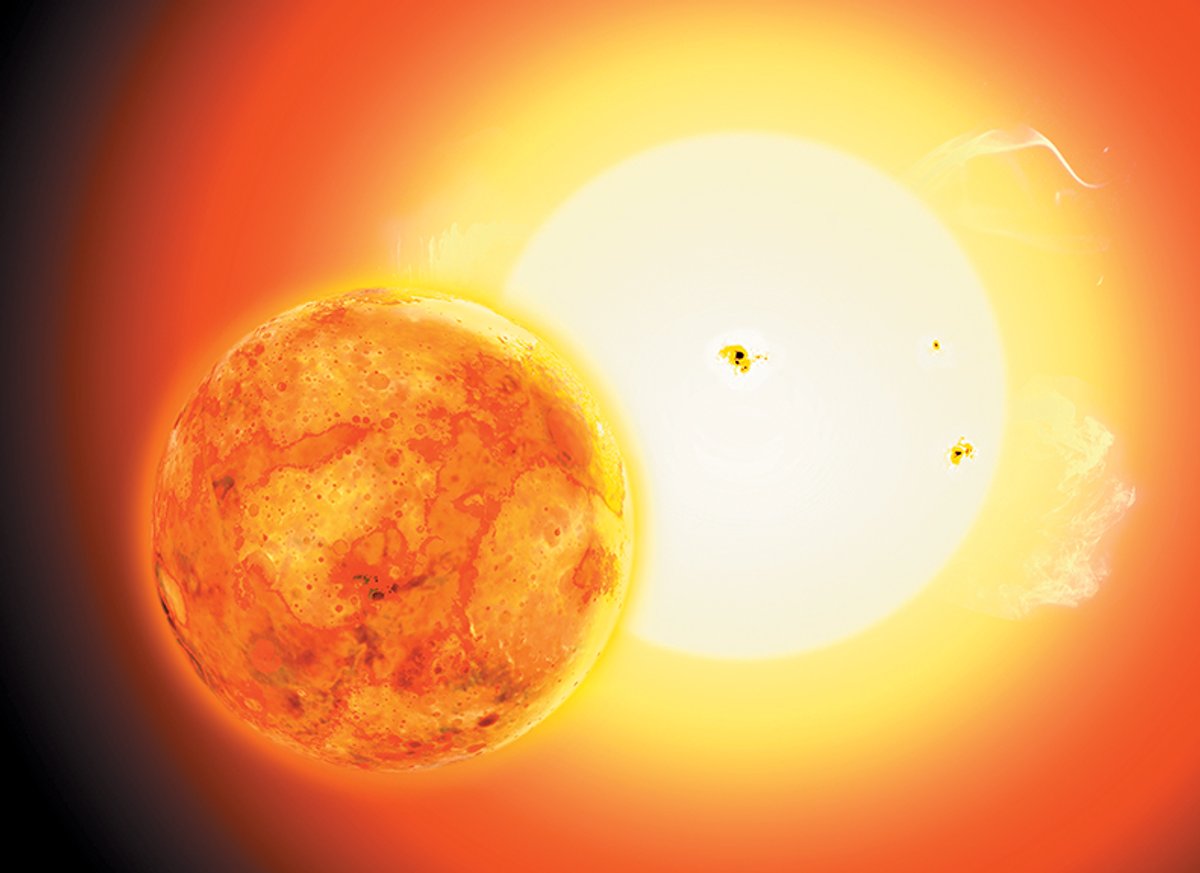
NASA's James Webb Space Telescope has detected the strongest evidence yet for an atmosphere on a rocky exoplanet. TOI-561 b, an ultra-hot super-Earth 1.4 times the size of our planet, orbits its star in under 11 hours at less than one million miles — so close that its surface is a permanent magma ocean with temperatures exceeding 1,800°C.
The finding defies prevailing models that predicted small planets this close to their stars cannot retain atmospheres. Webb's NIRSpec instrument measured dayside temperatures far cooler than expected, suggesting thick gases and powerful winds redistribute heat to the nightside. Water vapor may absorb infrared radiation before it escapes, acting as an insulating blanket.
The discovery reshapes understanding of atmospheric retention on extreme worlds and expands the range of planets where atmospheres — a prerequisite for habitability — can survive.