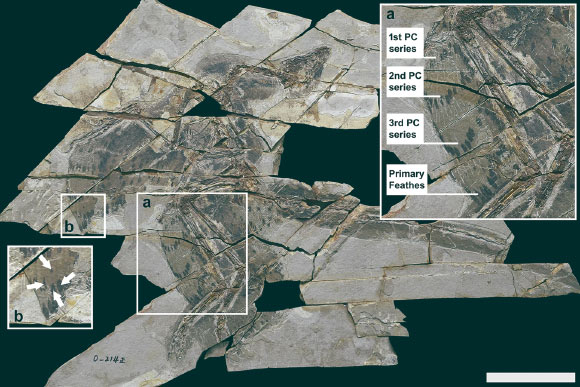
A team led by Dr. Yosef Kiat of Tel Aviv University analyzed nine exceptionally preserved Anchiornis fossils from eastern China and discovered these winged dinosaurs were flightless. The key evidence: their feathers molted in an irregular, messy pattern rather than the symmetrical sequential replacement seen in modern flying birds — a telltale sign of flightlessness.
The 160-million-year-old specimens belong to Pennaraptora, a group that emerged roughly 175 million years ago and is believed to have originally evolved feathers for flight. The findings suggest the path to bird flight was far more complex than assumed — some dinosaur lineages apparently developed flying ability only to lose it later, much like modern ostriches and penguins.
The study, published in Communications Biology, challenges the long-held view that wing evolution was a one-way street toward flight. Researchers from Tel Aviv, China, and the United States say the discovery reshapes our understanding of how dinosaurs and early birds experimented with aerial locomotion over tens of millions of years.