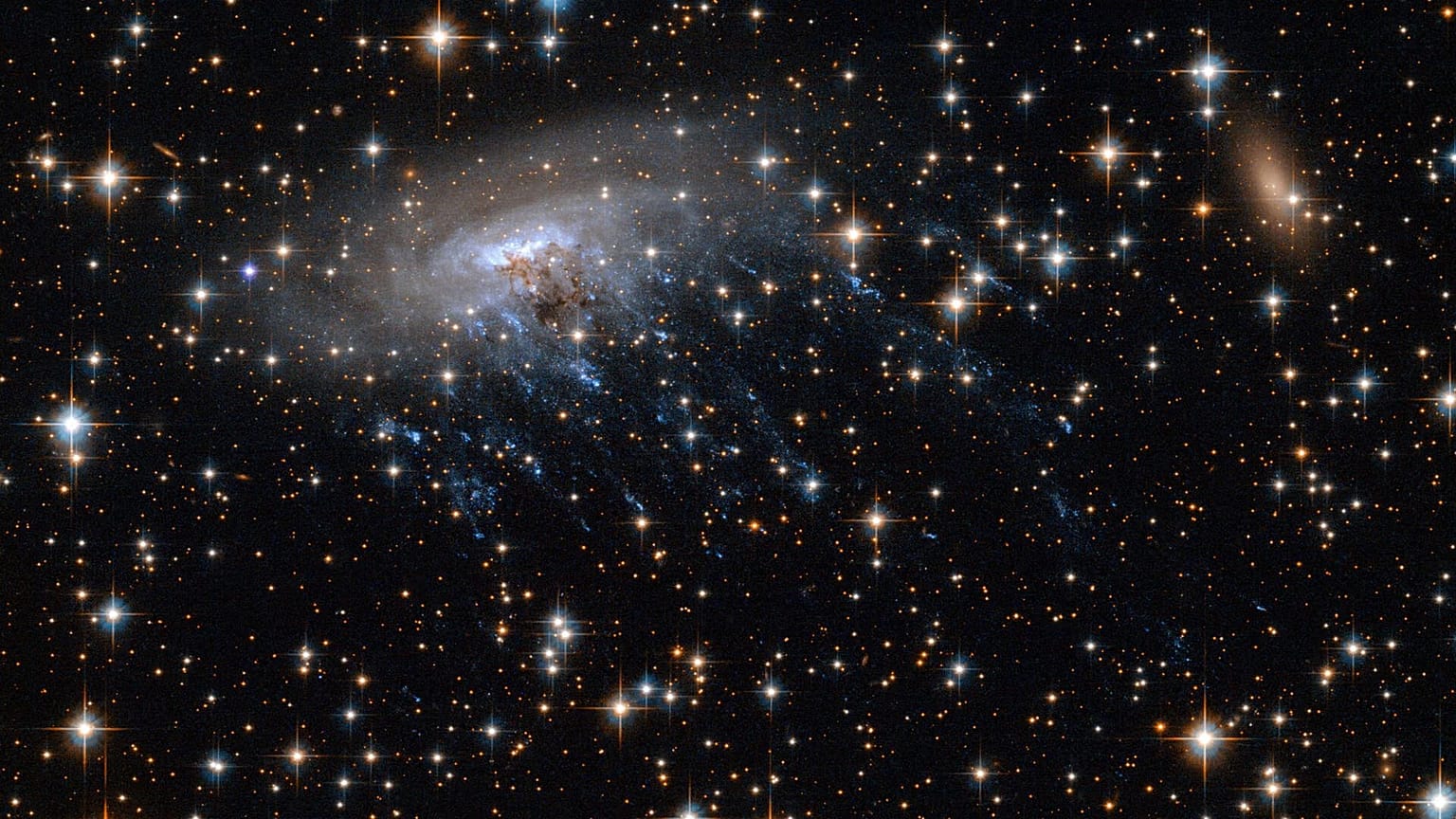
University of Waterloo astronomers using NASA's James Webb Space Telescope have discovered the most distant "jellyfish galaxy" ever observed, at a redshift of z = 1.156 — meaning its light traveled 8.5 billion years to reach Earth. The galaxy, found in the COSMOS deep field, features long tentacle-like trails of gas and bright blue clumps of newborn stars being stripped away as it hurtles through a dense galaxy cluster.
"Early on in our search of the JWST data, we spotted a distant, undocumented jellyfish galaxy that sparked immediate interest," said Dr. Ian Roberts, a Banting Postdoctoral Fellow at the Waterloo Centre for Astrophysics. The phenomenon, known as ram-pressure stripping, occurs when hot gas within a cluster acts like a powerful wind, pushing a galaxy's own gas out behind it.
The finding, published in The Astrophysical Journal, challenges previous assumptions that galaxy clusters 8.5 billion years ago were still gently assembling. Instead, they were already harsh enough to violently reshape galaxies — pushing back the timeline of when these extreme cosmic environments formed.