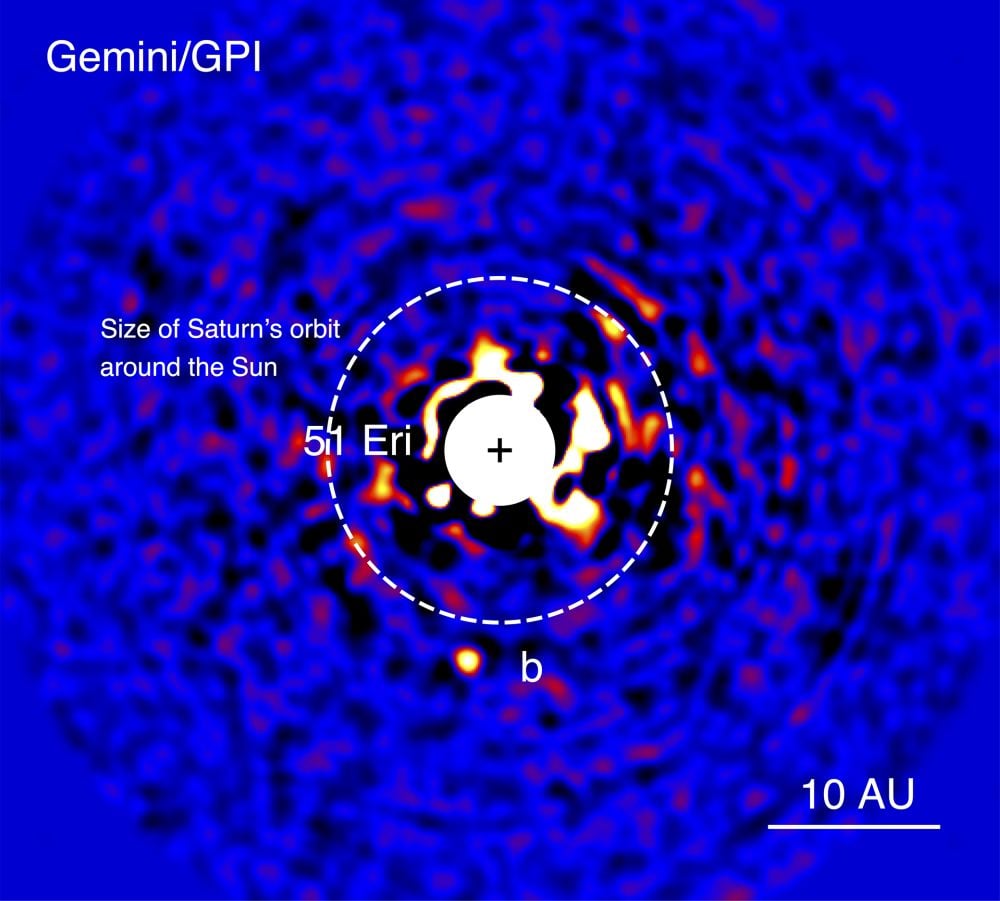
Northwestern University researchers have developed FLIP, a method that removes starlight from James Webb Space Telescope images far more precisely than standard techniques. Exoplanets are roughly a million times fainter than their host stars, so subtracting the glare is the main obstacle to imaging them. Published in Nature, the work was led by graduate student Rodrigo Ferrer-Chavez with Jason Wang.
Instead of subtracting a reference image of a different star, FLIP builds a physics-based "digital twin" of the telescope that models how light travels through it, including tiny shifts and imperfections. The model is tuned until it matches real observations, then the star's glare is subtracted.
On JWST NIRCam data of 51 Eridani at 4.3 micrometers, the standard KLIP method failed to detect planet 51 Eridani b, while FLIP found it above 5 sigma. The authors report 2-15 times better sensitivity, which could ease stability demands for future missions such as the Habitable Worlds Observatory.