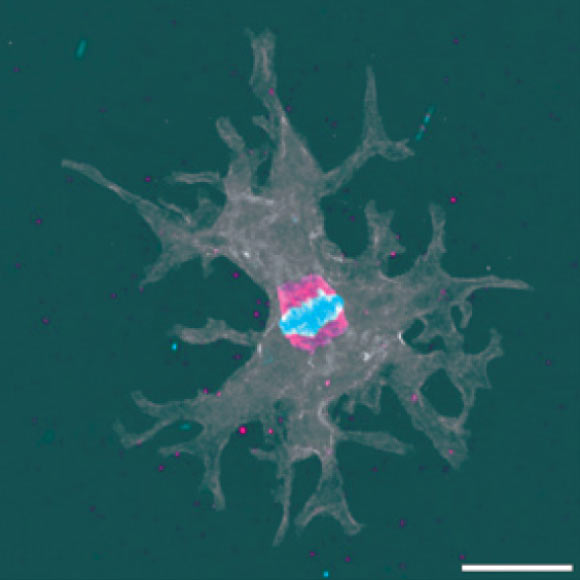
Scientists at Syracuse University have discovered a new amoeba species, Incendiamoeba cascadensis, that completes full cell division at 63°C (145°F) and stays motile up to 64°C (147°F). The organism was isolated from a tributary of Hot Springs Creek in Lassen Volcanic National Park, California, after three years of sampling led by doctoral student H. Beryl Rappaport.
The find pushes the known upper temperature limit for eukaryotic life — organisms with a nucleus, from fungi to animals — well past the roughly 57°C previously held by other heat-tolerant amoebae. The fire amoeba can even form a protective coating and survive encased in it at up to 70°C, reawakening once temperatures drop. Its cells ramp up repair systems and carry distinctive, positively charged surface proteins similar to those seen in heat-loving bacteria and archaea.
Related genetic signatures turned up in geothermal sites in New Zealand and Yellowstone National Park, suggesting similar extremophile amoebae may be more widespread than assumed. The research was published in the journal Cell on September 22, 2026.