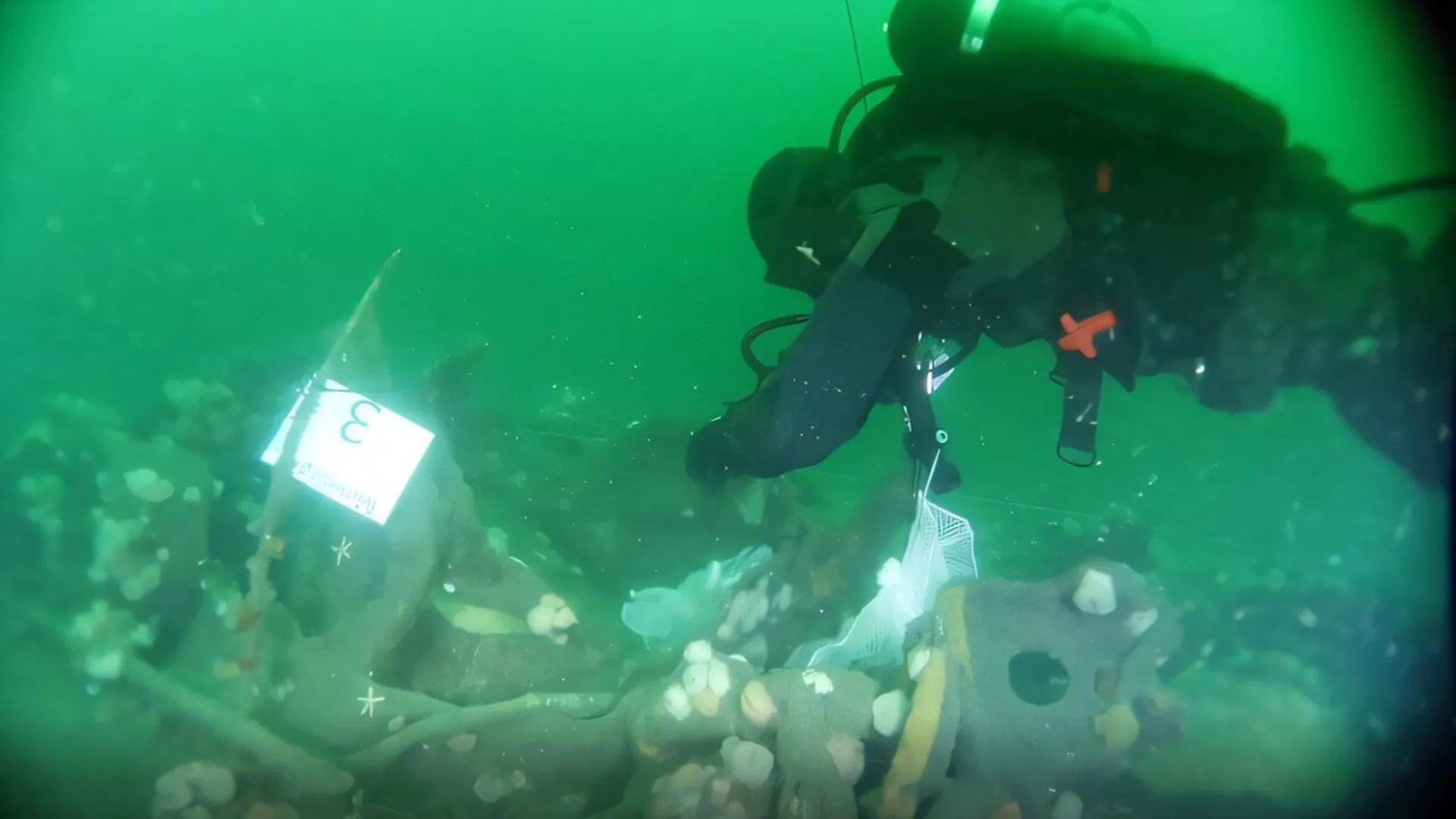
A German World War I submarine that sank off the Danish island of Rømø in 1917 is still leaking TNT into the surrounding seabed, water and marine life more than a century later, researchers from Aarhus University have found.
The UC-30 struck a British mine on April 19, 1917, and went down with 18 mines and six torpedoes aboard, killing all 27 crew members. The wreck wasn't located until 2016, when Danish diver Gert Normann Andersen found it. Since civilian diving at the site is prohibited, Danish Navy divers collected water, sediment and wildlife samples — including mussels and starfish — for analysis by geoscience professor Katrine Juul Andresen's team, which detected TNT traces around the hull. A Danish environmental assessment estimates the submarine could still hold more than two tonnes of unexploded TNT.
The find is not isolated: Danish waters alone hold over 10,000 shipwrecks, roughly 15% of them from the World War I and World War II eras, and researchers warn the pollution risk will grow as more hulls corrode and expose their munitions. The EU-funded REMARCO project is now testing seabed robots that can map at-risk wrecks and, eventually, help retrieve or neutralize the explosives inside them.