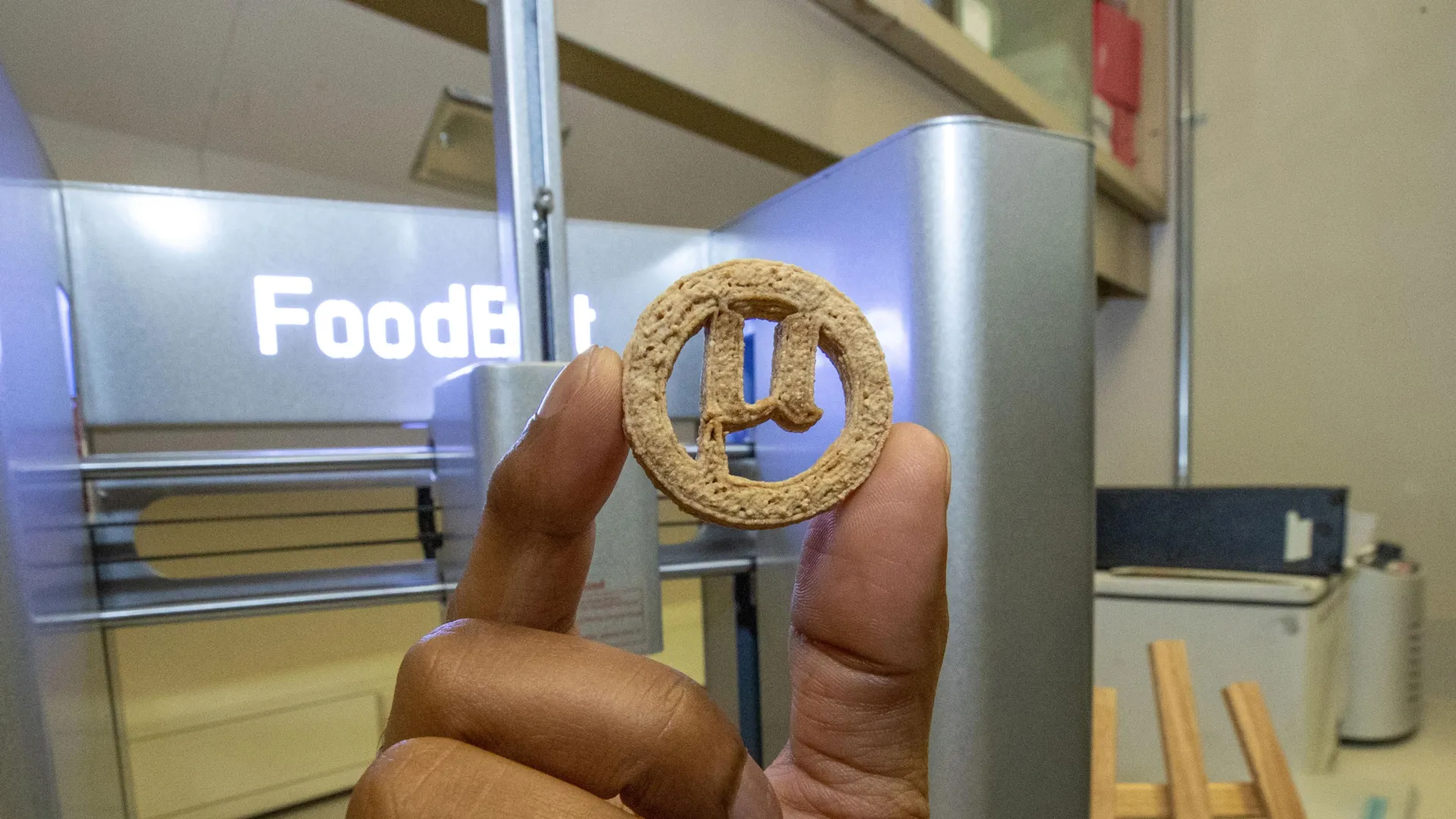
Researchers at Southern Illinois University Carbondale have engineered yeast strains that convert PET plastic bottles and agricultural waste into food ingredients, then 3D-print them into protein-rich cookies called μBites. The process first breaks down plastic and biomass like corn stalks using high-temperature, high-pressure water and oxygen, then feeds the resulting molecules to genetically programmed yeast that produces proteins, fats, vitamins and even vanilla flavoring.
The project, led by Associate Professor Lahiru Jayakody with graduate student Sandhya Jayasekara, is partly funded by NASA's Deep Space Food Challenge and an NSF CAREER grant. The team sees applications far beyond space travel, including feeding people in disaster zones and on submarines, as global food demand is projected to rise 35-56% by 2050.
The cookies currently cost about $60 per kilogram to produce and have only been evaluated by aroma so far, as the researchers await institutional approval for formal taste tests. They say improving the yeast's efficiency and scaling up production should bring the price down.