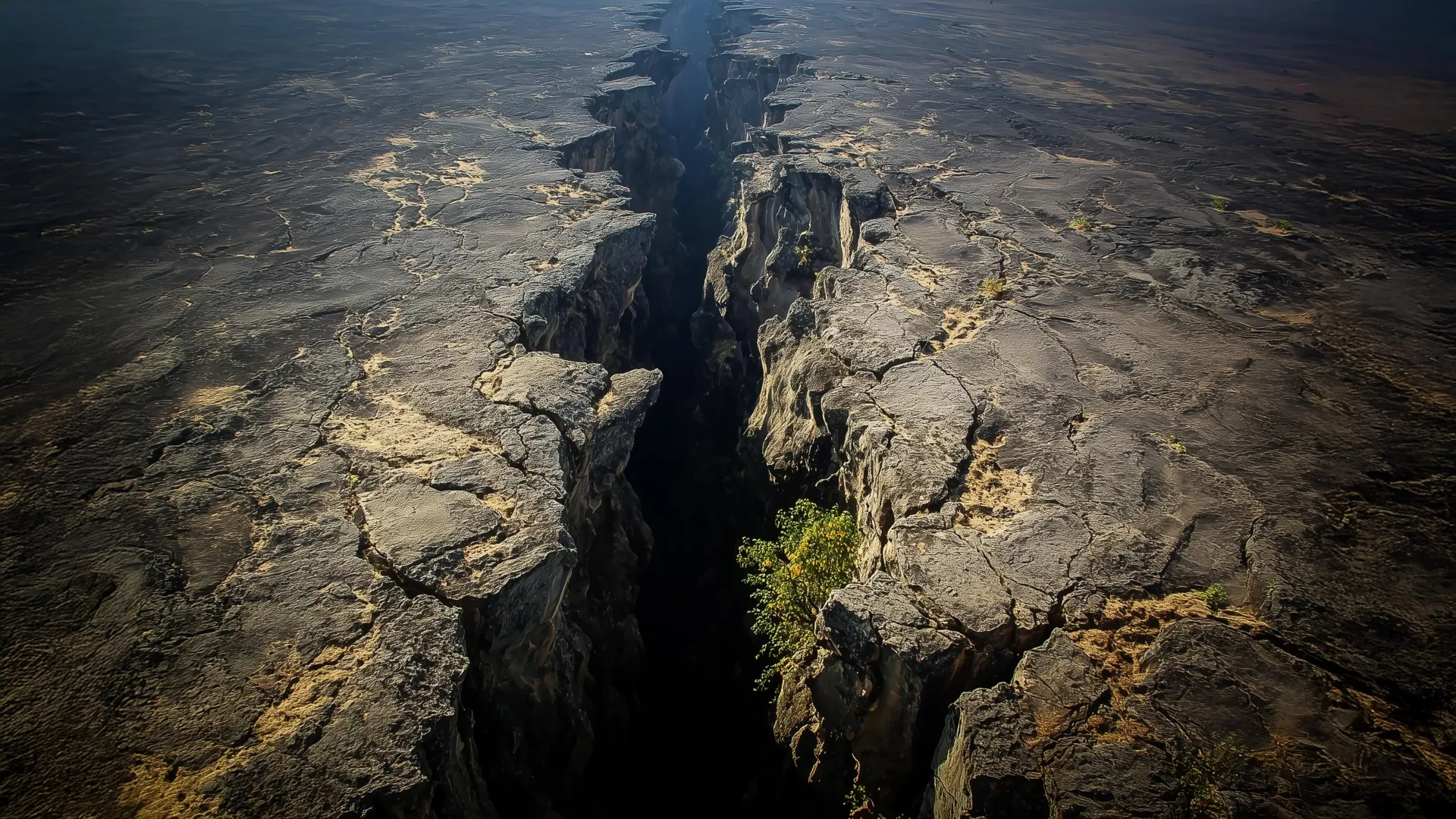
A new 3D thermomechanical modeling study from Virginia Tech's Geodesy and Tectonophysics Lab has pinpointed why parts of the East African Rift System deform in ways that don't fit the usual east-west stretching pattern. The answer, published in the Journal of Geophysical Research, is the African Superplume — a vast column of hot rock rising from deep within the mantle.
The team, led by postdoctoral researcher Tahiry Rajaonarison with principal investigator D. Sarah Stamps, found that shallow buoyancy forces in the lithosphere explain the rift's typical perpendicular stretching, but a separate, deeper mantle flow is responsible for anomalous motion running parallel to the rift, along with matching seismic anisotropy patterns detected in the rock below.
Stamps described the lithosphere's dual behavior with an analogy: "If you hit Silly Putty with a hammer, it can actually crack and break. But if you slowly pull it apart, the Silly Putty stretches." The findings give geologists a clearer picture of how deep-Earth dynamics and near-surface forces work together as the African continent slowly splits apart.