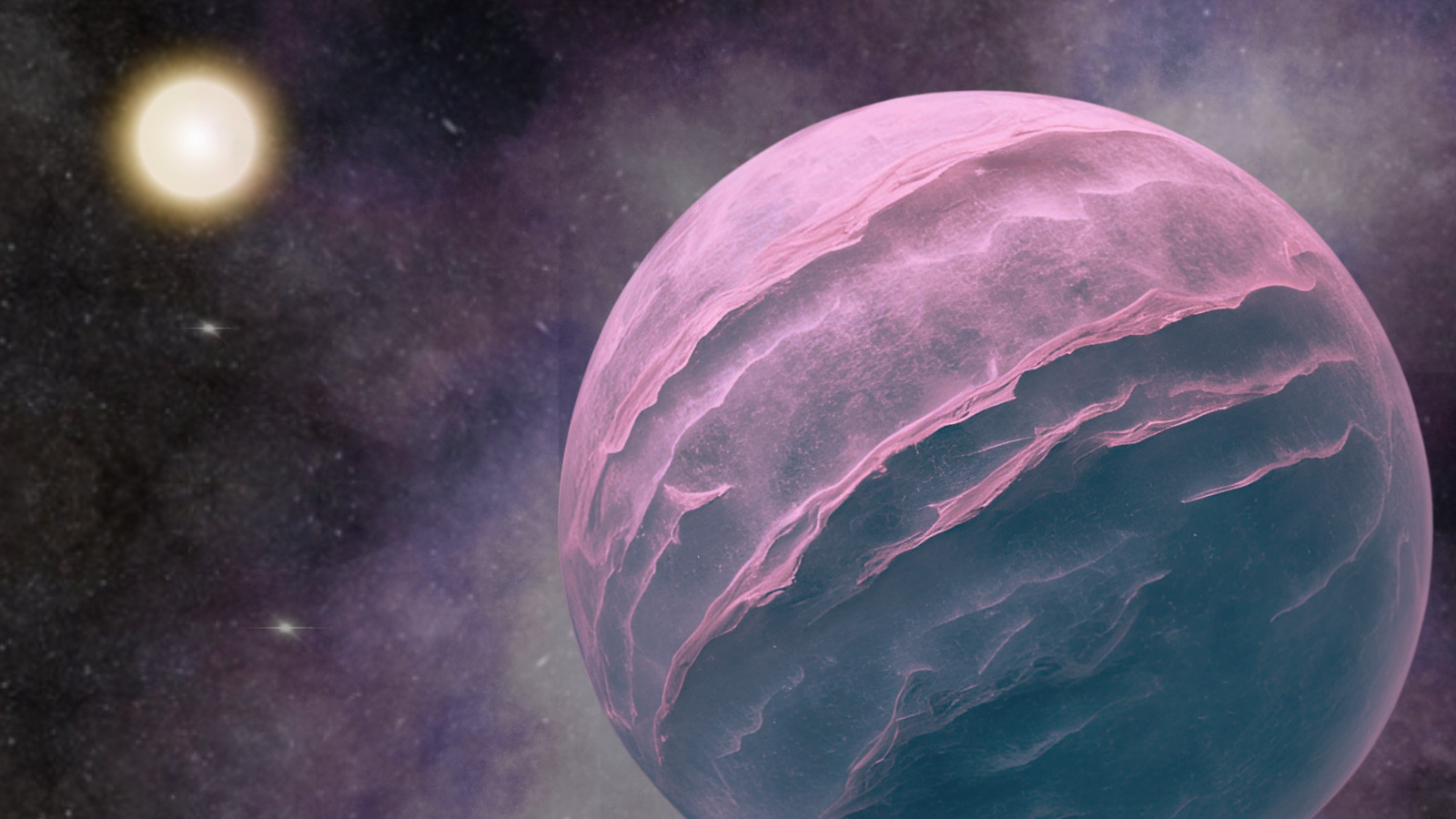
The James Webb Space Telescope (JWST) has finally cracked the decade-long mystery of GJ504b, a peculiar exoplanet nicknamed the "Pink Planet" located 57 light-years from Earth. Scientists have detected exotic salt clouds in the world's atmosphere — a composition unlike anything observed in a planetary body before, with one researcher remarking: "We realized it was not like anything we have analyzed before."
GJ504b has puzzled astronomers since its discovery in 2013. With a mass roughly 25 times that of Jupiter, it teeters on the boundary between a giant planet and a brown dwarf. What makes it unusual is its remarkably cool temperature of around 290°C (550°F) — far colder than most gas giants captured through direct imaging, which typically exceed 500°C. Scientists had long struggled to explain its atmospheric readings with standard models.
The breakthrough came when researchers introduced salt clouds into their atmospheric simulations, producing a precise match with JWST's spectroscopic observations. The finding provides the strongest direct evidence yet that salt clouds can exist in the atmospheres of extremely cold substellar bodies — a phenomenon long theorized but never confirmed. The research, published on June 18, 2026, underscores JWST's growing power in revealing the unexpected chemical diversity of worlds beyond our solar system.