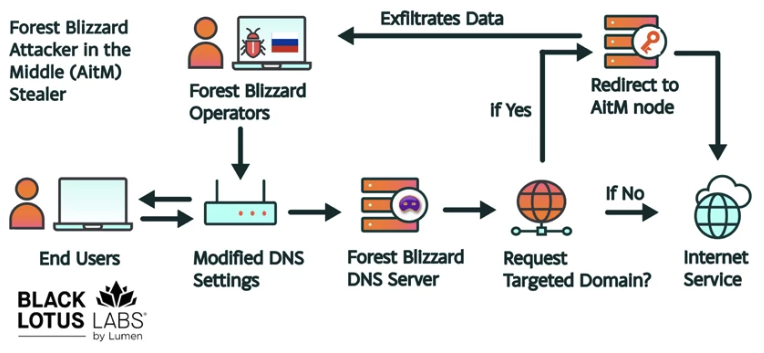
Russia's GRU military intelligence unit, tracked as APT28 or Forest Blizzard, compromised over 18,000 small office and home routers worldwide by exploiting known vulnerabilities in older MikroTik and TP-Link devices. Instead of installing malware, the hackers silently reconfigured DNS settings to redirect traffic through attacker-controlled servers, intercepting OAuth authentication tokens from Microsoft Office users — effectively bypassing multi-factor authentication.
Microsoft identified more than 200 organizations and 5,000 consumer devices caught in the campaign, with government agencies including foreign affairs ministries and law enforcement among the primary targets. Users who bypassed TLS certificate warnings were redirected to fake login pages mimicking Microsoft Outlook Web Access, allowing the attackers to harvest passwords, emails, and authentication tokens from devices on the same network as the compromised routers.
The U.S. Department of Justice and FBI conducted a court-authorized operation to disrupt the GRU's network of compromised routers. The FCC also announced it would stop certifying foreign-made consumer routers, citing national security concerns about compromised devices threatening critical infrastructure.