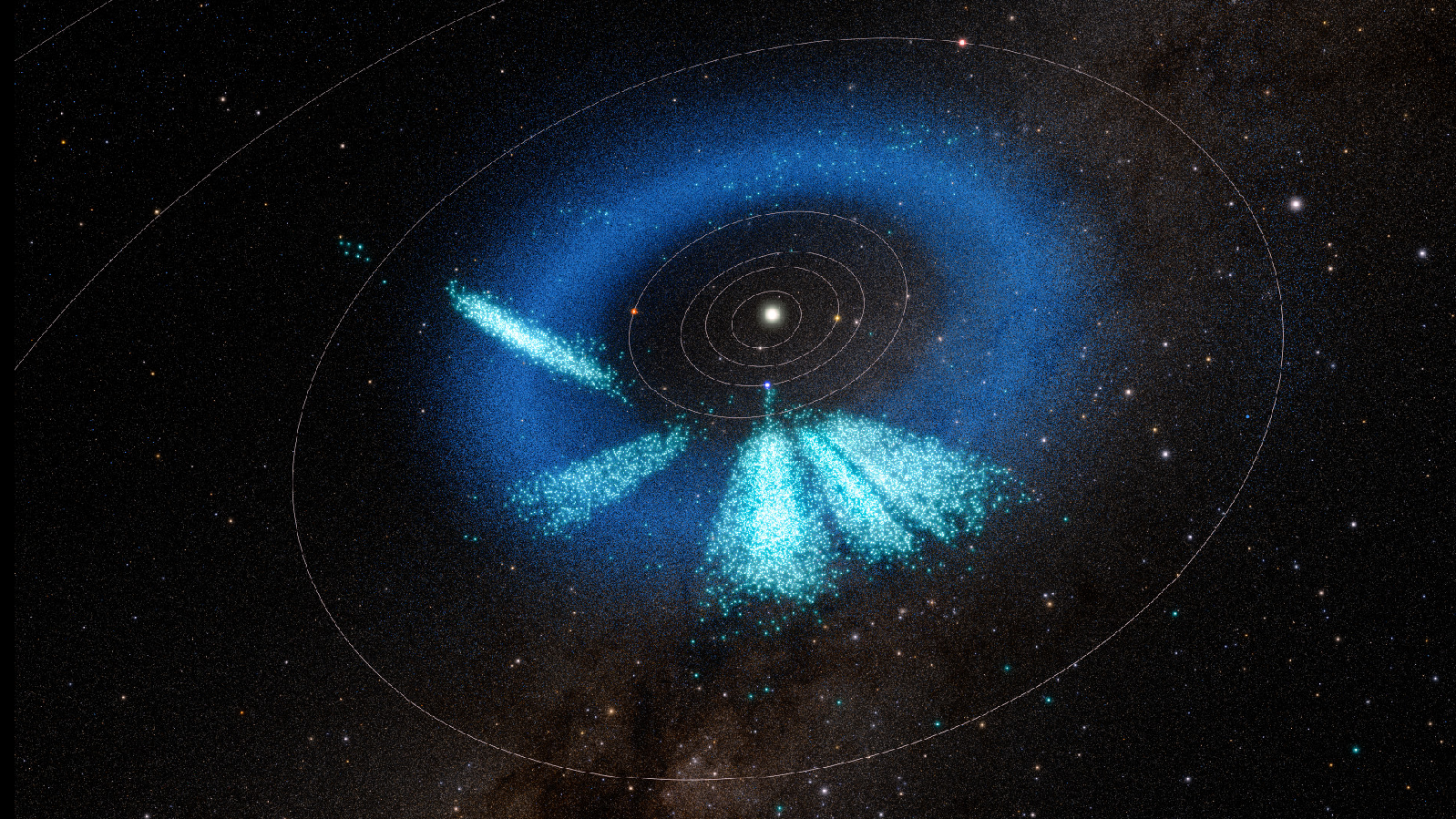
The NSF–DOE Vera C. Rubin Observatory has discovered over 11,000 new asteroids from just six weeks of preliminary observations, confirmed by the International Astronomical Union's Minor Planet Center. The haul includes 380 trans-Neptunian objects, 33 previously unknown near-Earth objects, and two extreme TNOs that travel as far as 1,000 AU from the Sun — ranking among the 30 most distant known minor planets. None of the newly discovered near-Earth objects pose a threat to Earth.
"What used to take years or decades to discover, Rubin will unearth in months," said Mario Juric, Rubin Solar System Lead at the University of Washington. The approximately one million observations also re-measured over 80,000 already-known asteroids. Once the decade-long Legacy Survey of Space and Time (LSST) begins later this year, Rubin is expected to find 11,000 asteroids every two to three nights — tripling the total known asteroid count, increasing known trans-Neptunian objects nearly tenfold, and pushing discovery of near-Earth objects larger than 140 meters to roughly 70%.