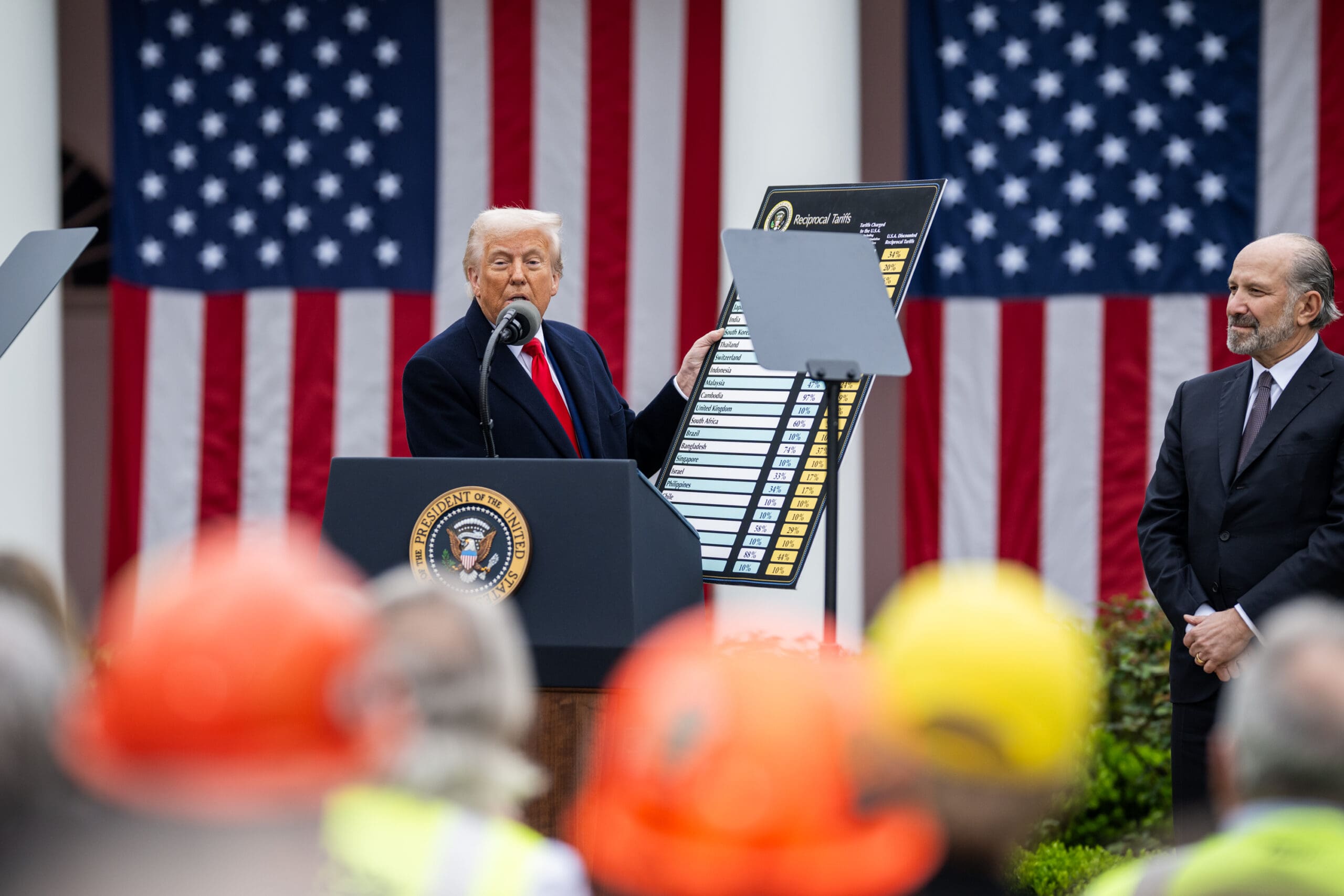
One year ago today, President Trump announced sweeping "reciprocal" tariffs on nearly all imports in a Rose Garden ceremony dubbed "Liberation Day." The tariffs imposed a minimum 10% duty on all imports, with rates up to 50% on 57 trading partners. Trump promised a manufacturing renaissance and millions of new jobs. The data tell a starkly different story.
From April 2025 to February 2026, the US lost 89,000 manufacturing jobs — roughly 9,000 per month — while 190,000 blue-collar jobs disappeared overall. Input costs soared: primary metal manufacturing inputs rose 17.41%, electrical equipment inputs jumped 9.90%, and clothing store inputs surged 15.27%. A Federal Reserve Bank of Richmond survey found 41% of firms adjusted hiring plans in response to tariff uncertainty, and the US goods trade deficit hit an all-time high in 2025.
In February 2026, the Supreme Court ruled Trump's use of emergency powers to enact the tariffs unconstitutional. The government collected approximately $166 billion from over 330,000 businesses before the ruling, and US Customs is now building a system to process refunds. Analysts note the tariffs raised less revenue than projected, failed to bring manufacturing back, and primarily raised prices for American consumers.