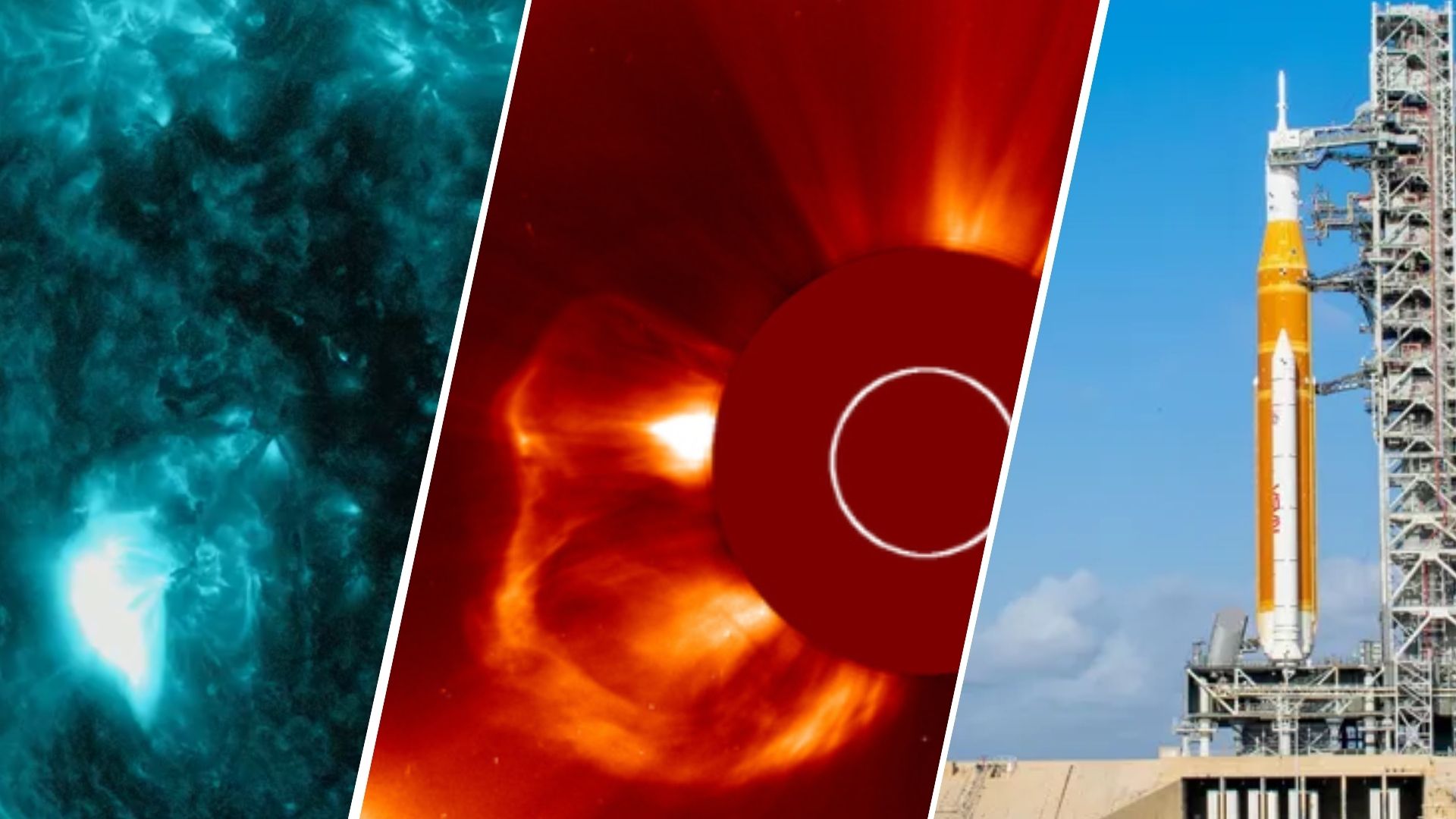
An X1.5-class solar flare erupted from sunspot region AR4405 at 2:47 UTC on March 30, launching a coronal mass ejection (CME) toward Earth at approximately 1,845 km/s — nearly five times the normal solar wind speed. The flare triggered an R3 (strong) radio blackout across the Pacific and Asia-Pacific regions.
NOAA forecasters warn of G3 (strong) to G4 (severe) geomagnetic storm conditions when the CME arrives around 10:40 UTC on March 31, with the possibility of reaching G5 (extreme) levels if the interplanetary magnetic field turns strongly southward. If predictions hold, auroras could be visible as far south as New York, London, Paris, and Berlin.
The timing adds complexity to NASA's Artemis II mission, scheduled for launch on April 1. Space weather experts are monitoring conditions closely, as severe storms can disrupt power grids, GPS navigation, and high-frequency radio communications.