Overview
The Cimarrón Uruguayo is a compact, muscular molosser from Uruguay. It descends from European dogs, chiefly the Alano Español, that ran wild after the colonial period and later returned to work with ranchers.
It is brave but calm, friendly with children and other animals, and usually barks only when a threat is real. It is used for guarding, hunting, rescue, herding and dog sports.
History
Dogs brought by early colonisers were released or abandoned and thrived in the wild. In the eighteenth century they were hunted, with bounties paid on each one killed, yet many survived, especially in the highlands of Cerro Largo, where ranchers tamed them as guards.
Its survival story made it a national symbol. After about twenty years of documentation work the Uruguayan kennel club recognised it, and the FCI gave provisional recognition in 2006 and full recognition in 2017.
Appearance
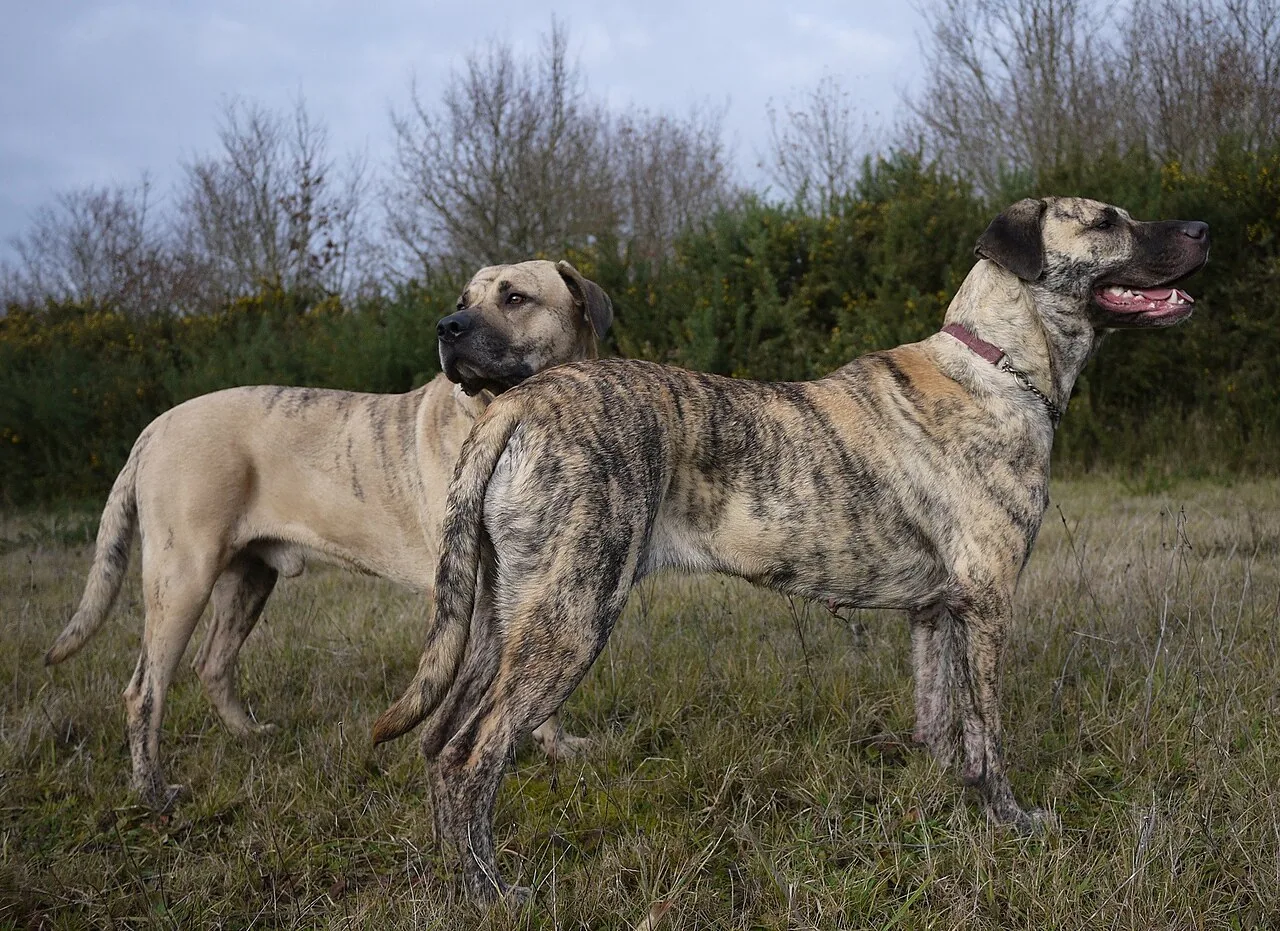
The Cimarrón is a large, compact, muscular dog with a short coat, usually brindle but sometimes pale yellow, with a black face. Males stand 58 to 61 cm and weigh 38 to 45 kg; females are slightly smaller.
Temperament
The breed standard calls for great courage, yet the dog is calm and stable and very friendly with children and other animals. It is smart and can turn its paw to many jobs.
Like any large dog it should be well socialised very young to be a safe companion.
Care and exercise
This is an active, athletic dog that needs daily exercise and meaningful work or sport. Early socialisation and consistent training are important.
The short coat needs little more than occasional brushing.
Health
Hip and elbow dysplasia testing is recommended before breeding. Ear cropping is sometimes done in its homeland, but it is unnecessary and is not permitted in many countries.