Overview
The Alano Español is a medium-to-large, powerful Spanish dog of bulldog or alaunt type. Over the centuries it has been a war dog, a bullfighting dog, a cattle dog, a boar hunter and a guard.
The breed nearly vanished in the twentieth century, but a recovery project has brought numbers back. It is not recognised by the FCI but is officially recognised in Spain.
History
The origins of the Alano are unknown. One theory links it to dogs brought to Spain by the Alani in the fifth century. A fourteenth-century hunting book mentions colourful dogs called Alani, and similar dogs went with Spanish explorers as war dogs.
From the late nineteenth century its work disappeared as bull-ring use was banned and herding and hunting changed. A surviving population was found in the Basque Country in the 1980s, a standard and stud-book followed, and Spain officially recognised the breed in 2004.
Appearance
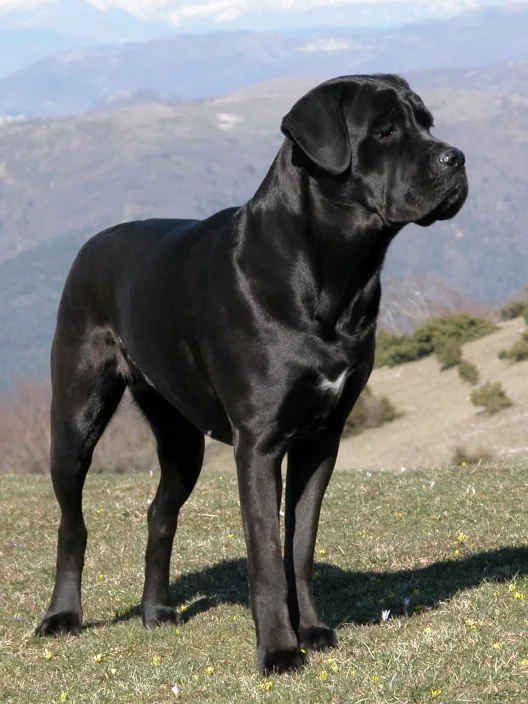
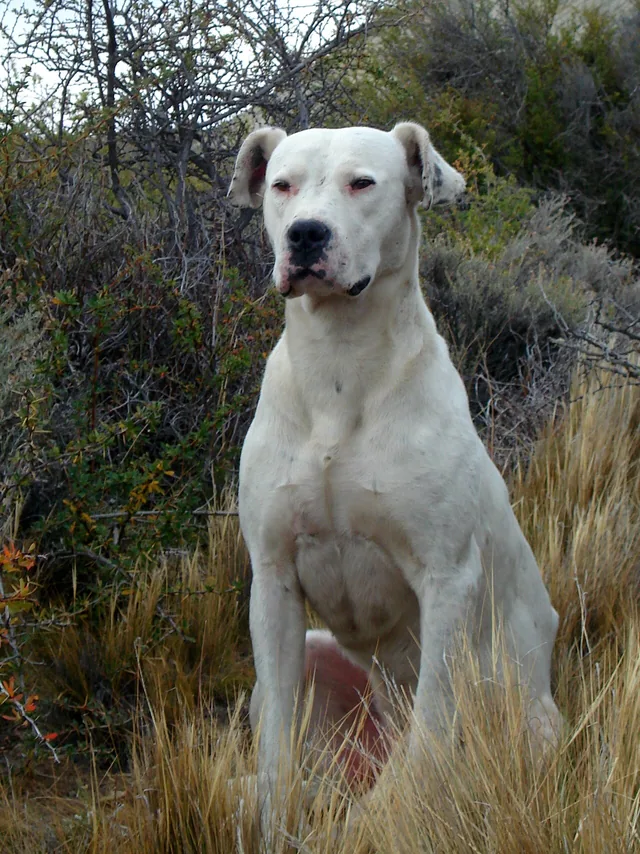
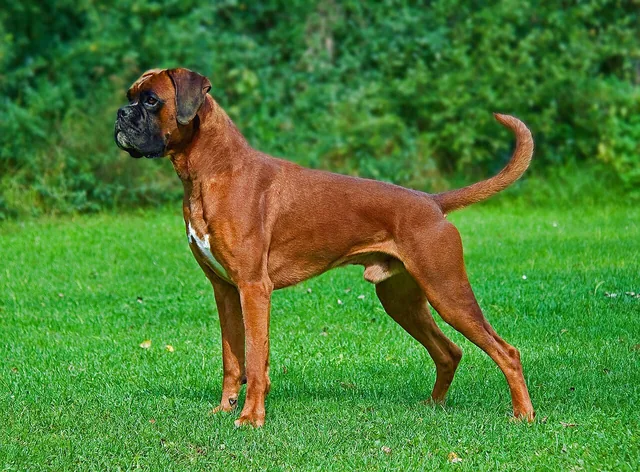
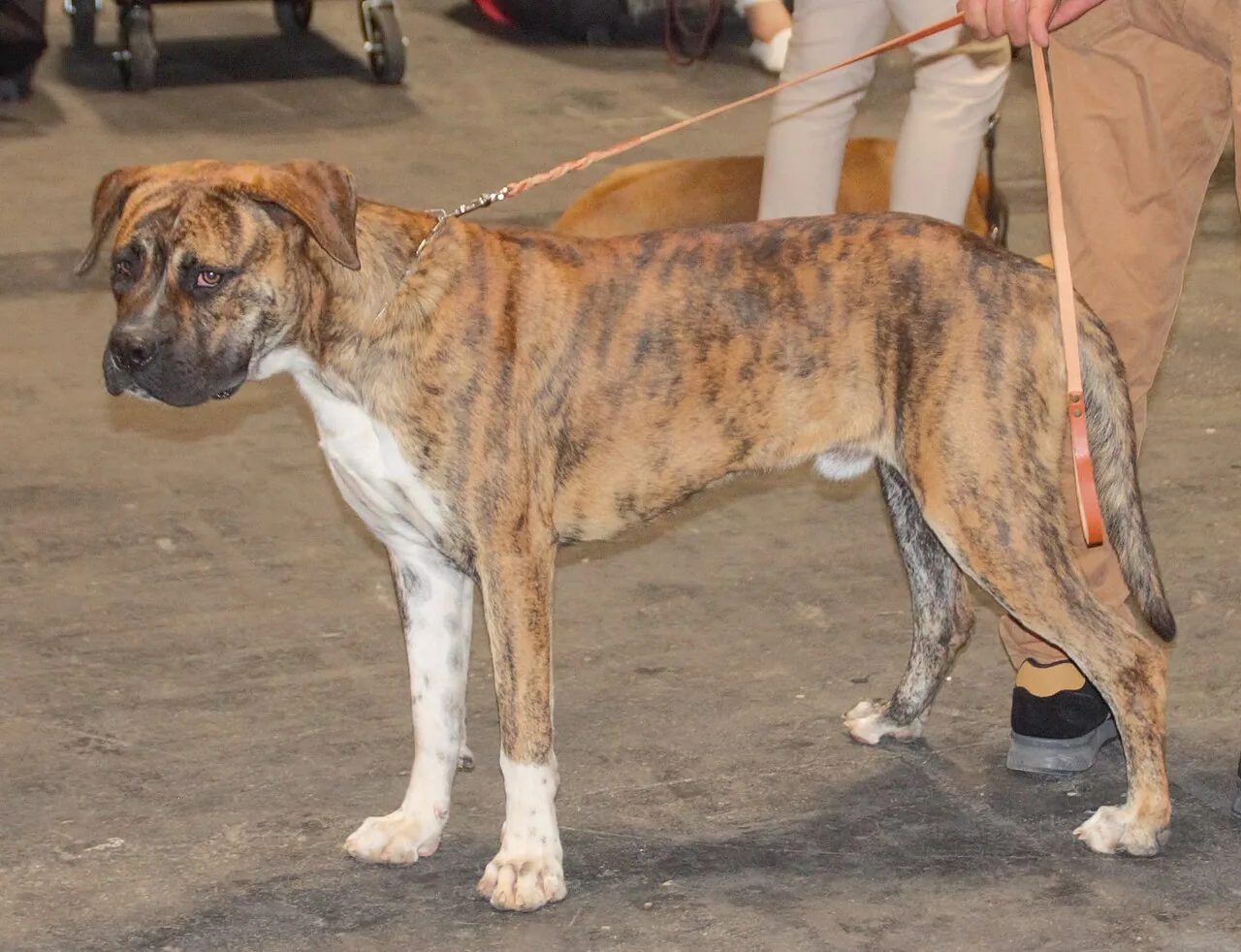
The Alano is a large, strongly built dog with a big, squarish head and a short muzzle. The skin is thick, with folds at the neck and a few wrinkles on the face. The ears are set high and hang down when left uncropped.
Females stand about 55 to 60 cm and weigh 25 to 30 kg, with males slightly taller and heavier. The coat is short and thick, most often brindle.
Temperament
Because it was used in packs for hunting, the Alano is sociable with other dogs. It is brave, strong and loyal, with a natural guarding instinct.
Like any powerful guarding breed, it needs an experienced, confident owner, early socialisation and consistent, fair training.
Care and exercise
The Alano needs daily exercise and a job or activity to keep it fit and occupied. Early socialisation and firm but kind training are essential given its size and strength.
The short coat needs only occasional brushing. Wipe facial folds regularly to keep them clean and dry.
Health
The Alano is generally robust, but as a large, short-muzzled dog it can be sensitive to heat and strenuous exercise in hot weather. Facial folds should be kept clean.