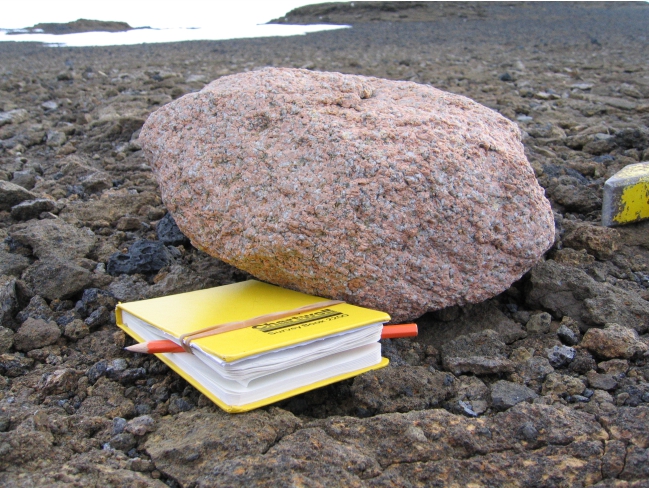
Scientists from the British Antarctic Survey have discovered a hidden granite mass nearly 100 kilometers wide and 7 kilometers thick buried beneath West Antarctica's Pine Island Glacier. The finding began with a mystery: pink granite boulders sitting atop the Hudson Mountains, far from any known granite source.
Dr. Joanne Johnson's team dated the boulders to 175 million years ago using radioactive decay in mineral crystals. Gravity sensors aboard BAS aircraft then detected a massive subsurface anomaly matching a granite body hidden deep beneath the ice. The discovery shows Pine Island Glacier once moved very differently, dragging rocks from its base and carrying them uphill when the ice sheet was far thicker.
Understanding the bedrock beneath Pine Island Glacier — one of Antarctica's fastest-melting regions — is critical for predicting future sea level rise. "By combining geological dating with gravity surveys, we've uncovered new information about how the ice sheet flowed in the past and how it might change in the future," said Dr. Tom Jordan, lead geophysicist on the study published in Communications Earth & Environment.