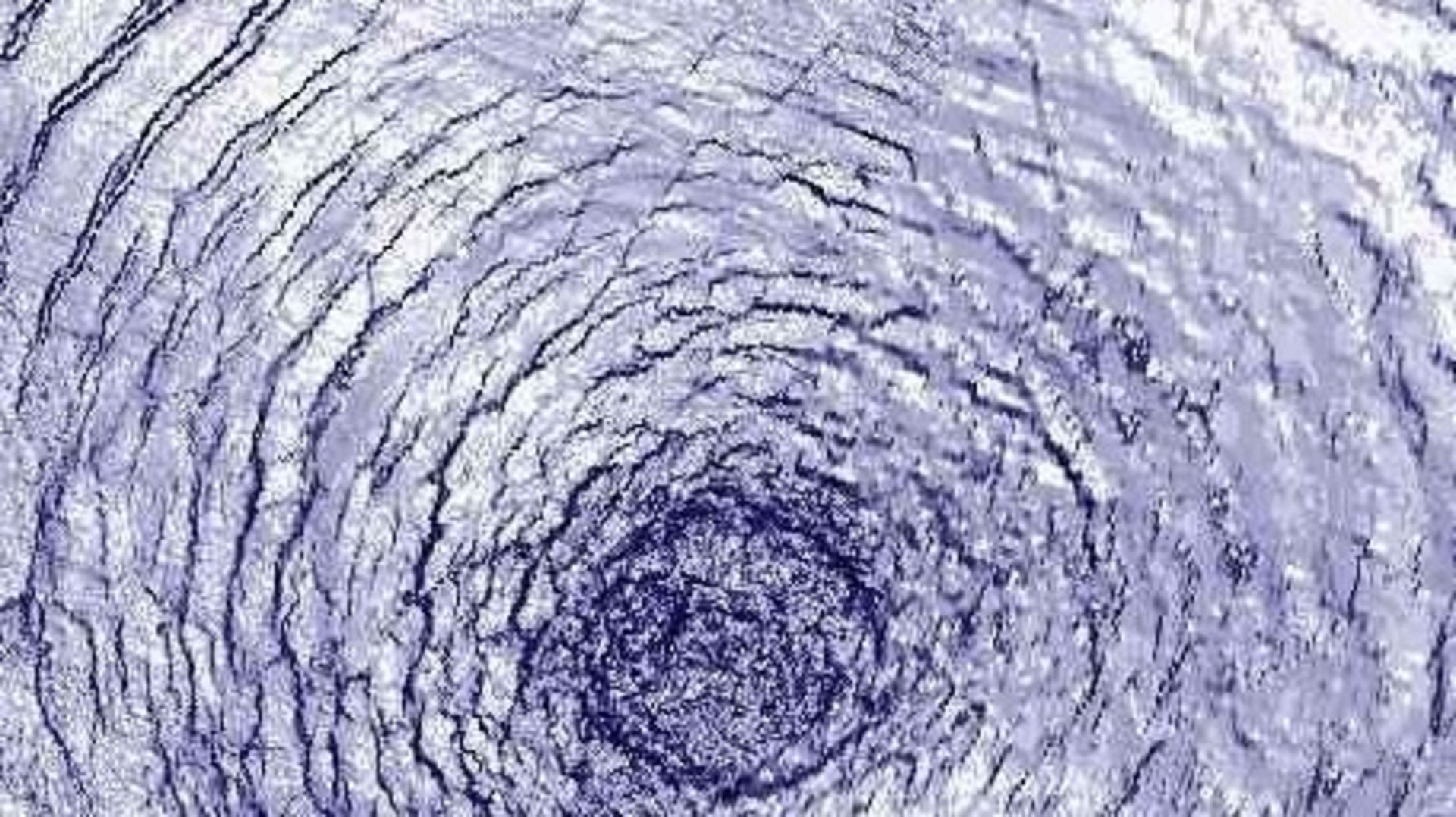
Researchers led by Dr. Uisdean Nicholson at Heriot-Watt University have finally resolved a decades-long debate about the Silverpit Crater, a mysterious formation buried 700 meters beneath the North Sea seabed about 80 miles off the Yorkshire coast. By identifying rare shocked quartz and feldspar crystals — minerals that only form under extreme impact pressures — the team proved beyond doubt that a 160-meter asteroid struck the seabed between 43 and 46 million years ago.
The asteroid hit at a low angle from the west, creating a 3-kilometer-wide crater surrounded by a ring of circular faults spanning 20 kilometers. Within minutes of impact, a 1.5-kilometer curtain of rock and water erupted and collapsed into the sea, generating a tsunami over 100 meters (330 feet) high. Only about 33 impact craters have been identified beneath the ocean globally, making this confirmation particularly significant for understanding ancient cosmic impacts on Earth.