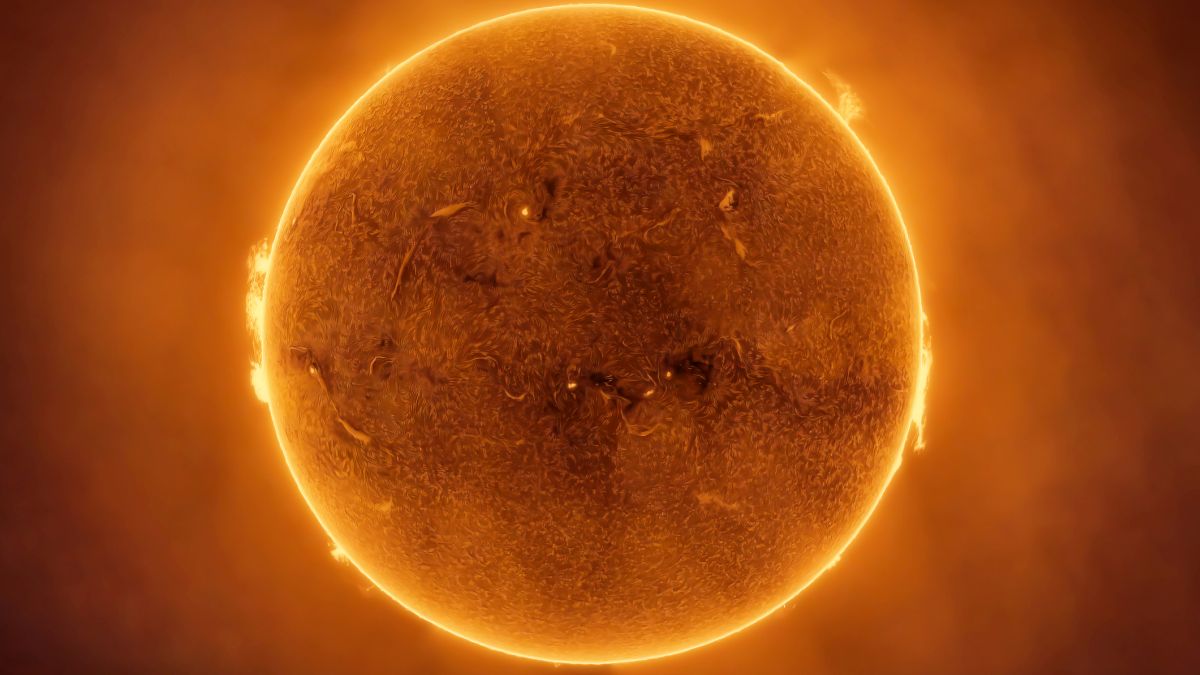
Researchers from the University of Birmingham and Yale University have discovered that the Sun's internal structure measurably shifts between activity cycles. Using 40 years of data from six telescopes in the Birmingham Solar-Oscillations Network (BiSON), the team analyzed four successive solar minima spanning cycles 21–25 and found that even small differences in magnetic activity produce detectable changes deep inside the Sun.
The 2008–2009 solar minimum — one of the longest and quietest on record — showed the clearest internal changes, with a stronger helium glitch signal, increased sound speed in outer layers, and slightly elevated temperatures. Astronomer Bill Chaplin noted that "deep quiet minima can leave a measurable internal fingerprint." The weakest solar maximum on record (cycle 24) followed this deepest minimum, suggesting internal conditions during quiet periods directly influence subsequent activity surges.
The findings, published in Monthly Notices of the Royal Astronomical Society, could transform how scientists forecast space weather — energetic outbursts that can disrupt satellites, GPS systems, and power grids on Earth.