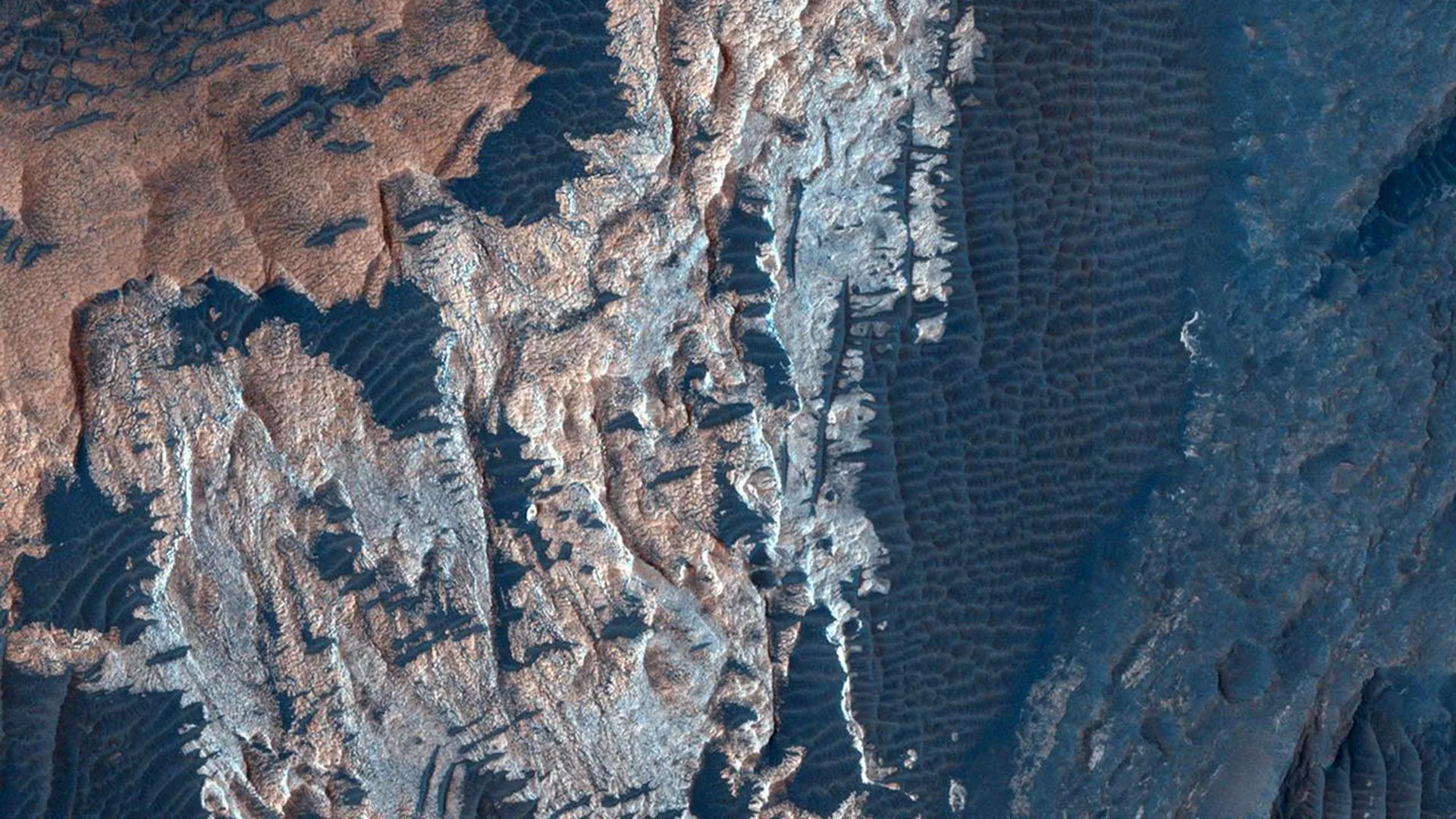
Researchers at the SETI Institute and NASA Ames Research Center have identified ferric hydroxysulfate, an unusual iron sulfate compound that may represent a previously unknown mineral on Mars. Dr. Janice Bishop and co-author Dr. Catherine Weitz found the compound in layered deposits at two sites near the massive Valles Marineris canyon system: Aram Chaos and the Juventae Plateau above a 5-km-deep canyon.
The mineral forms when hydrated ferrous sulfates are heated above 100°C in the presence of oxygen, suggesting geothermal or volcanic activity transformed ancient sulfate deposits more recently than scientists previously believed. The finding, published in Nature Communications, indicates that parts of Mars have remained chemically and thermally active far longer than expected.
The discovery has significant implications for astrobiology. If Mars preserved warm, chemically active conditions near its surface in relatively recent geological history, it may have also maintained environments capable of supporting microbial life longer than current models suggest.