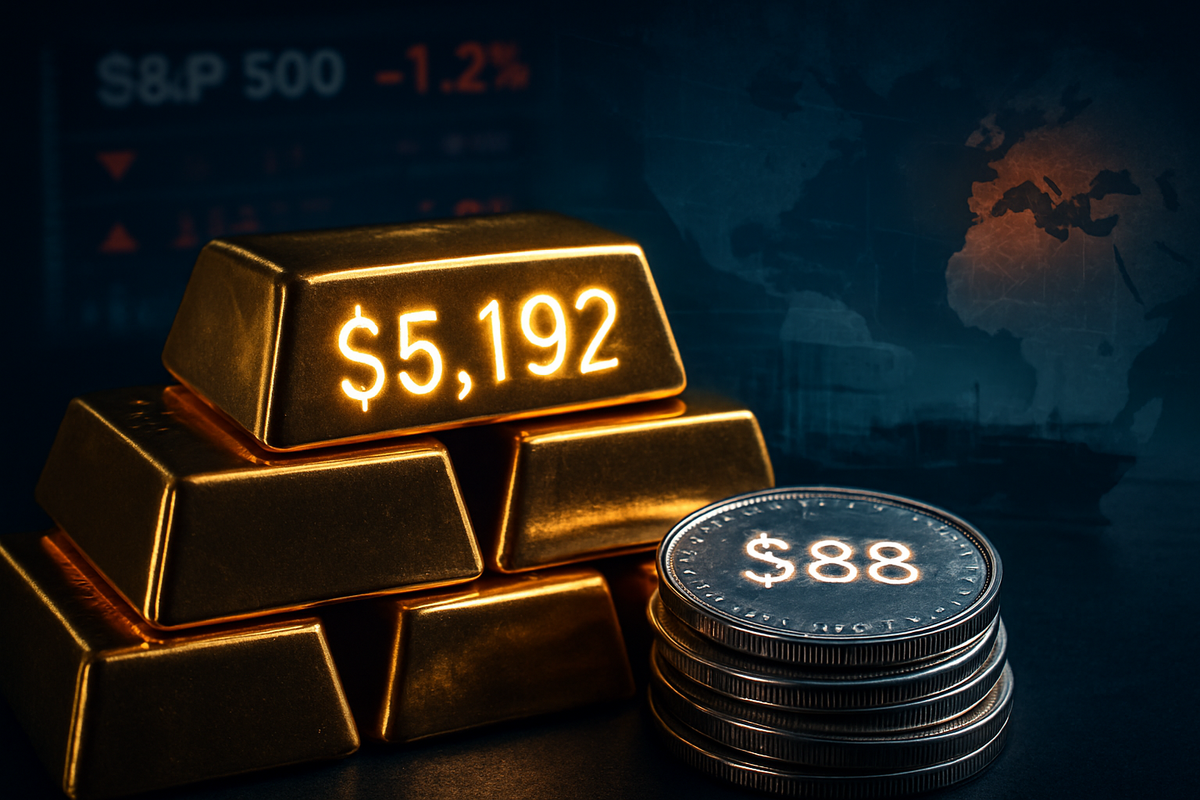
Gold surged to an all-time record of $5,192 per ounce on February 23, capping a historic rally that has nearly doubled the precious metal's price from around $2,300 just one year ago. The breach of the $5,000 psychological barrier in January triggered massive short-covering, and prices have continued climbing as investors flee to safe-haven assets amid escalating global uncertainty.
Central banks have been the dominant force behind the surge, accumulating over 1,000 tonnes of gold in each of the last three years — more than double the 400–500 tonne annual average of the prior decade. China and India are leading what analysts describe as a structural "de-dollarization" trend, diversifying reserves away from U.S. Treasuries into physical gold. Meanwhile, Trump's new 15% global tariffs under Section 122, imposed after the Supreme Court struck down his reciprocal tariffs, have deepened trade uncertainty and sent investors scrambling for safety.
Some analysts now see a potential $10,000 "supercycle" for gold, pointing to persistent inflation, weakening dollar confidence, and geopolitical flashpoints from Iran to Ukraine as long-term tailwinds. J.P. Morgan forecasts prices will remain elevated through 2026 as central bank demand shows no signs of slowing.