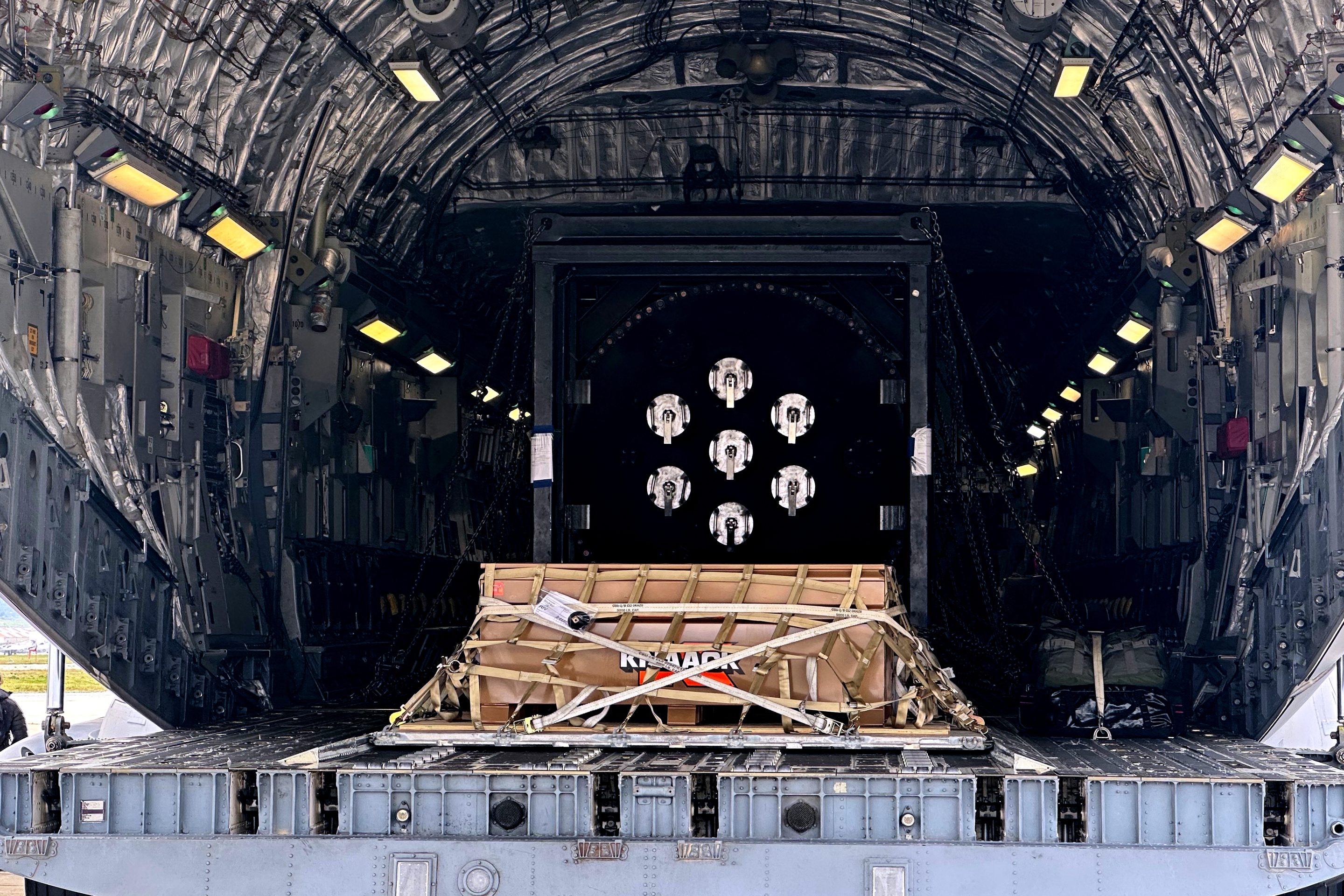
The U.S. military flew a nuclear microreactor aboard a C-17 Globemaster III for the first time on February 15, airlifting the unfueled Ward250 reactor nearly 700 miles from March Air Reserve Base in California to Hill Air Force Base in Utah in just two hours. The operation, dubbed "Operation Windlord," involved three C-17 aircraft and was carried out by the 62nd Airlift Wing, which specializes in nuclear material transport.
The Ward250, built by California startup Valar Atomics, uses eight modules with helium coolant, graphite moderators, and TRISO fuel — uranium kernels encased in ceramic layers. Once fueled and tested at the Utah San Rafael Energy Lab, the 5-megawatt reactor could power roughly 5,000 homes. The Pentagon aims to have at least three microreactors reach criticality by July 4, 2026, under Executive Order 14301.
The demonstration addresses two converging demands: military energy independence from vulnerable power grids, and skyrocketing civilian electricity needs driven by AI data centers. The U.S. currently operates 94 nuclear reactors generating about 19% of its electricity, and microreactors represent a new frontier for rapid, portable deployment.