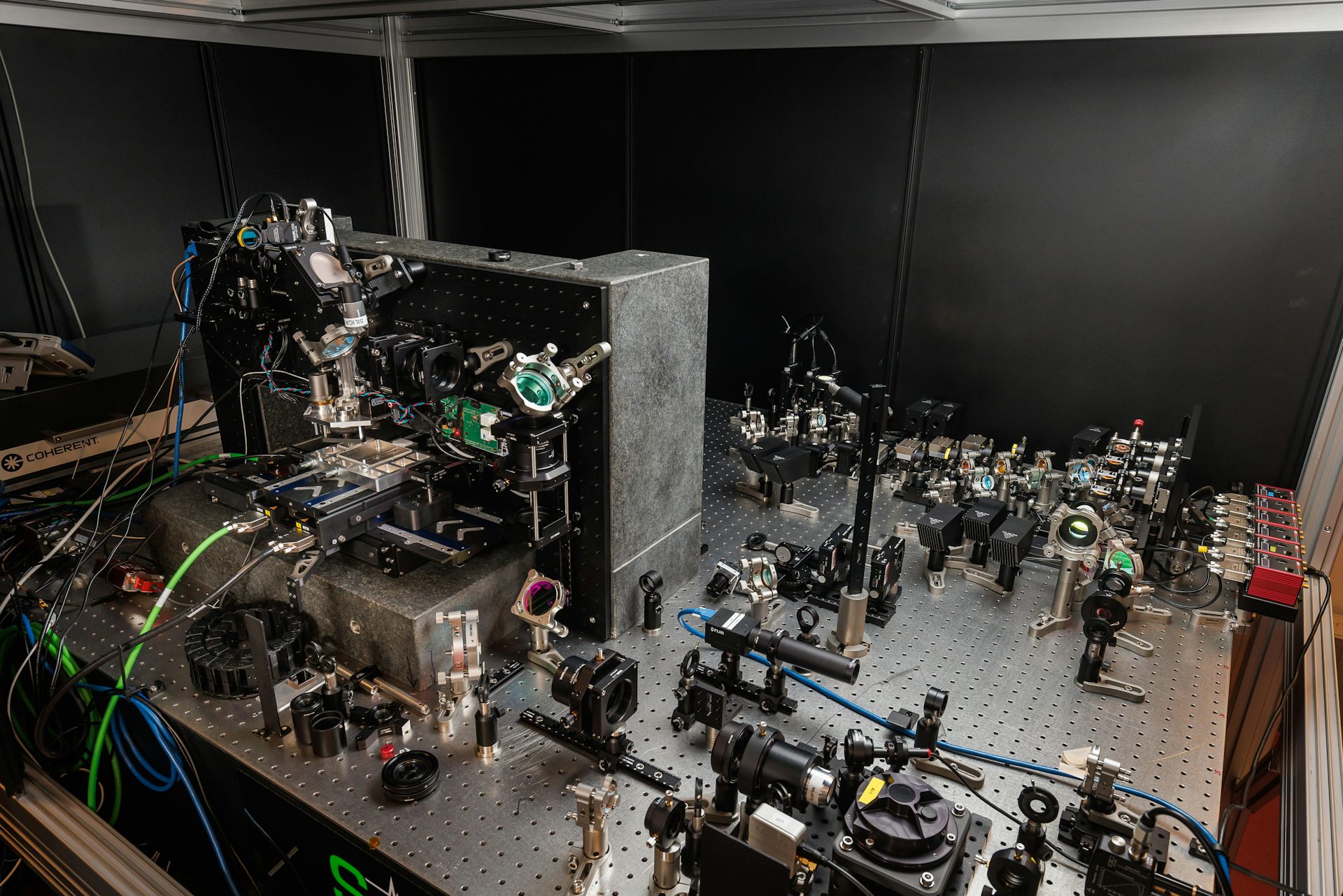
Microsoft Research has demonstrated a fully functional archival storage system called Project Silica that uses high-energy laser pulses to encode data into ordinary borosilicate glass. A 12-centimeter wide, 2-millimeter-thick glass square can store 4.8 terabytes of data — the equivalent of roughly two million printed books — and tests suggest the data would survive for 10,000 years at 290°C, potentially lasting tens of thousands of years at room temperature.
The system works by firing laser bursts lasting just a few quadrillionths of a second to create "plasma-induced nano explosions" at precise points inside the glass. These deformations change how light travels through the material, encoding bits of information in three dimensions. Unlike hard drives or tape, the glass requires no climate control, no electricity, and no migration to newer formats over time. The results were published in Nature on February 18.
The breakthrough could transform long-term data preservation for libraries, archives, and research institutions. Current storage media degrade within decades and require constant maintenance. Microsoft estimates glass storage could cut archival costs dramatically while ensuring data survives for millennia without any upkeep.