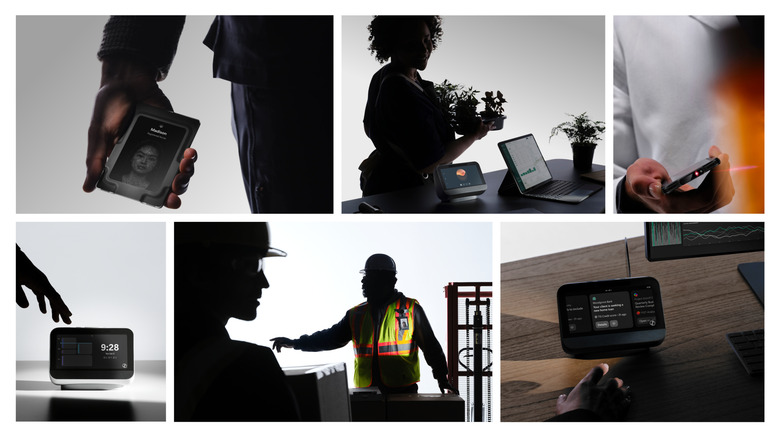
At its Build 2026 conference, Microsoft unveiled Project Solara, a chip-to-cloud platform for "agent-first" devices that run AI agents in place of traditional apps. It is built on MDEP (Microsoft Device Ecosystem Platform), an enterprise fork of Android rather than Windows, so it can run on small, low-power hardware while keeping the IT controls businesses expect: over-the-air updates, Microsoft Defender, Intune management, and Entra ID sign-in.
Microsoft showed two reference devices. A desktop hub signs users in with facial recognition, responds to voice, and surfaces the day's most pressing items, becoming a full cloud-hosted Windows machine when a monitor is attached. A wearable badge reimagines the employee ID card: a fingerprint button wakes an agent in one press, a single tap records and transcribes a conversation, and a built-in camera lets the agent act on what the user sees. The OS uses a "just-in-time UI" that generates interfaces dynamically and deliberately avoids a single dominant agent.
Companies including AccuWeather, Best Buy, CVS Health, Levi's and Target are expected to begin pilots in the coming months. Microsoft frames Solara as the next platform shift, from apps to AI agents.