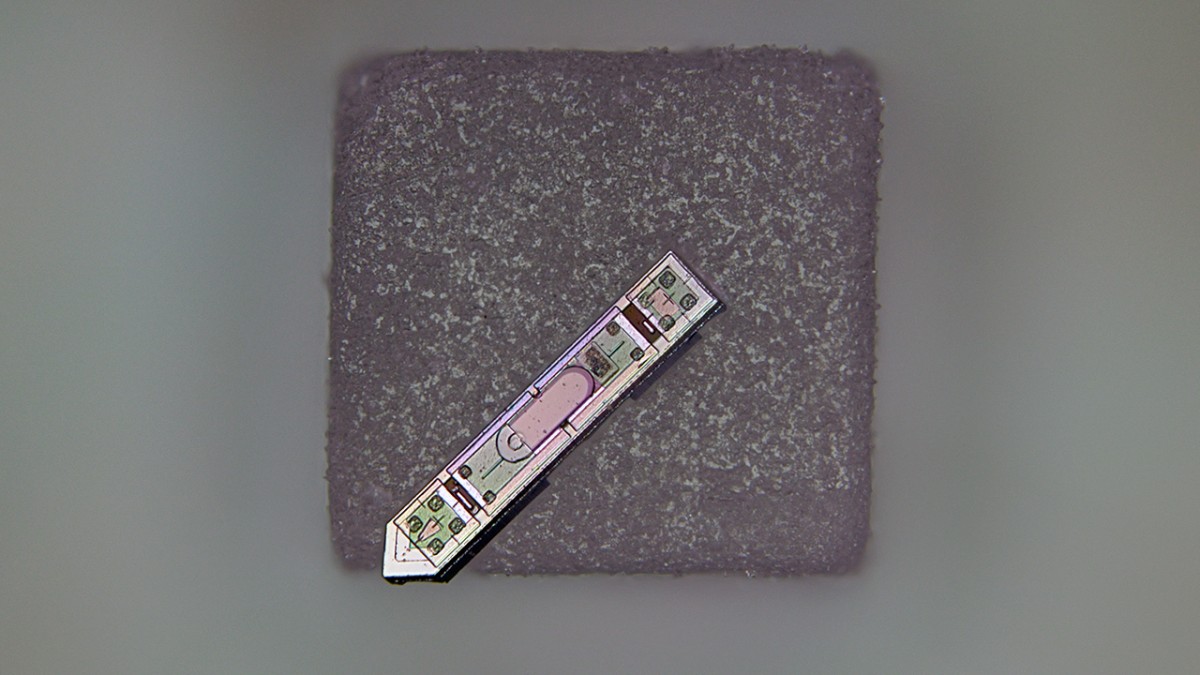
Engineers at Cornell University have created the smallest neural implant ever capable of wirelessly transmitting brain activity data. Called MOTE (microscale optoelectronic tetherless electrode), the device measures just 300 microns long and 70 microns wide — small enough to rest on a grain of salt. Powered by red and infrared laser beams that pass harmlessly through brain tissue, it transmits neural signals back using tiny pulses of infrared light.
The team, co-led by Alyosha Molnar and Sunwoo Lee, implanted the device in mice's barrel cortex and successfully recorded neuron activity for over a year while the animals remained healthy and active. Unlike conventional brain implants, MOTE's material composition could make it compatible with MRI scans — a major limitation of current devices. The technology could also be adapted for use in the spinal cord or paired with opto-electronics embedded in artificial skull plates, opening new frontiers in neuroscience research and brain-computer interfaces.