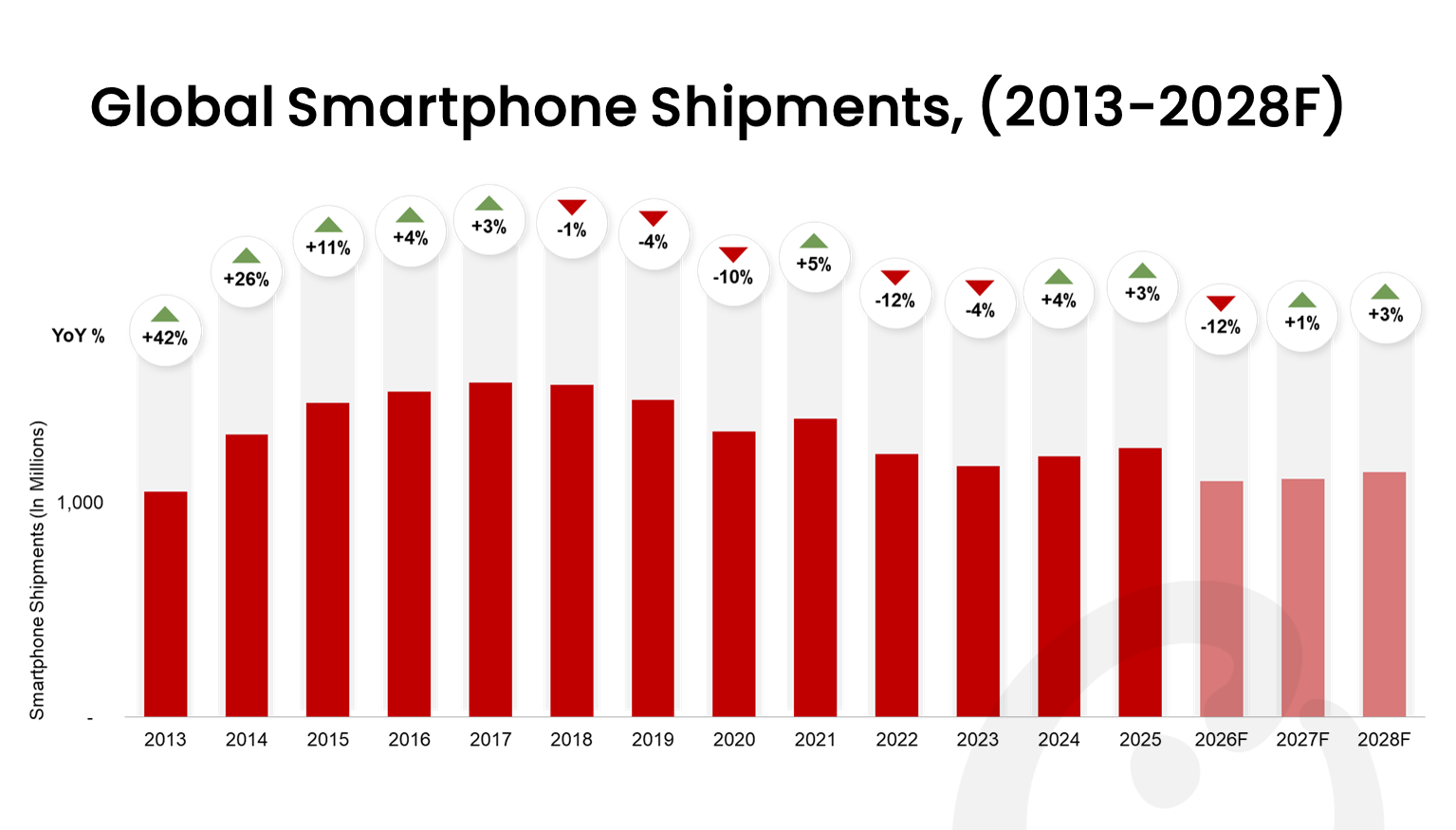
Morgan Stanley, Counterpoint Research, and IDC all slashed their 2026 smartphone forecasts this month, projecting a 12–13% year-over-year decline to below 1.1 billion units — the sharpest drop on record and the lowest annual volume since 2013. The root cause: Samsung, SK Hynix, and Micron are redirecting memory chip production toward higher-margin AI data center workloads, creating severe shortages of mobile-grade LPDDR4/5 components.
The pain is not evenly distributed. Android shipments are expected to fall 16%, while Apple's decline is projected at just 2%. The sub-$200 smartphone segment faces declines exceeding 20%, with emerging markets like the Middle East, Africa, and Latin America hit hardest. Average smartphone selling prices are set to surge 14% to a record $523 as manufacturers pass rising component costs to consumers.
Analysts warn the memory shortage will persist through at least mid-2027, with prices unlikely to return to previous levels even after stabilization. The crisis effectively marks the end of the ultra-cheap smartphone era, reshaping the competitive landscape in favor of Apple and Samsung.