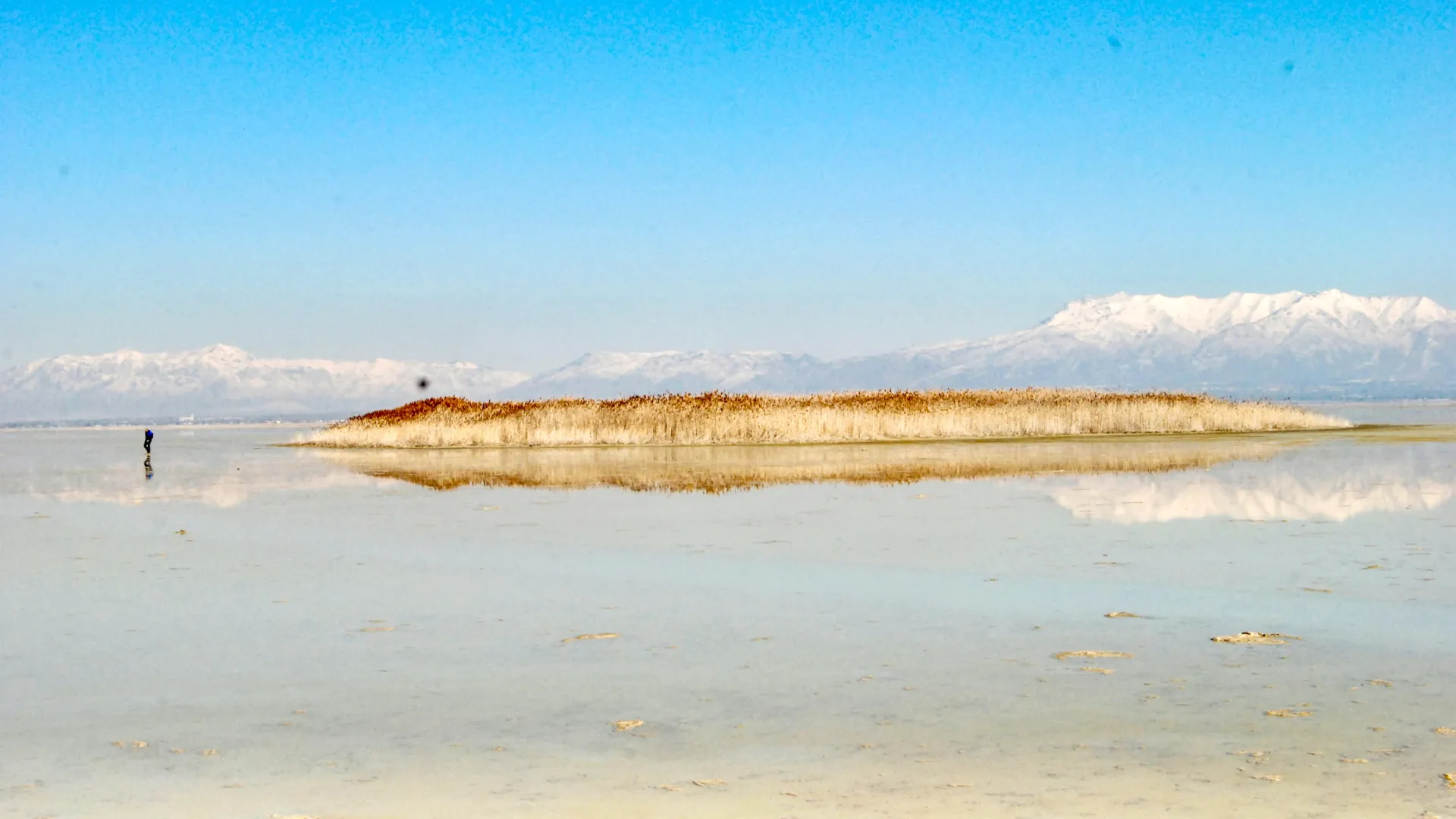
University of Utah geophysicists have discovered an enormous freshwater system lurking beneath the Great Salt Lake, extending to depths of 3 to 4 kilometers — about 13,000 feet underground. Using helicopter-borne electromagnetic surveys, the team found that freshwater saturates sediments far below the lake's hypersaline surface, accounting for roughly 12% of the lake's total water budget, four times more than the 3% scientists previously assumed.
The discovery began with mysterious reed-covered mounds on the exposed lakebed of Farmington Bay, formed by pressurized groundwater pushing upward through the playa. These strange phragmites-choked formations prompted the airborne geophysical survey that revealed the hidden freshwater extent.
Researchers are now investigating whether this underground water could help control hazardous dust clouds from the rapidly drying lakebed, a growing public health concern in the Salt Lake City region. The findings, published in Scientific Reports, were funded by the Utah Department of Natural Resources.